Tasez

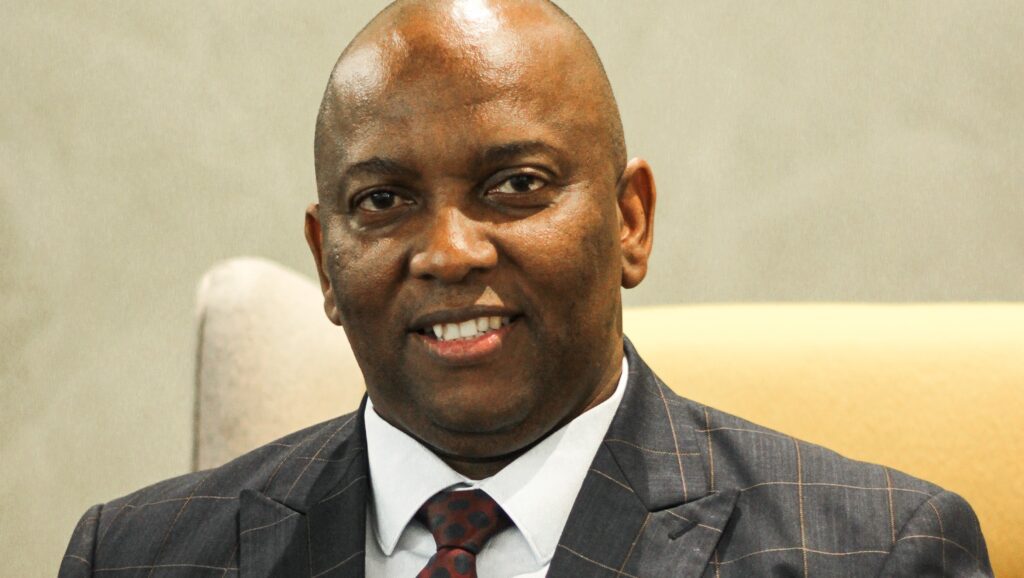
Dr Bheka Zulu

TASEZ shares investment ideas, experience with African SEZs

By Mandla Mpangase The leaders of Africa’s special economic zones (SEZs) – including Africa’s first automotive city – are putting their minds to the role they can play in attracting impactful investments and redefining competitiveness. This theme set the tone for the annual meeting of the African SEZs which was held in Nairobi, Kenya, at the end of November 2024. The meeting was attended by some 300 participants representing governments, international experts, decision-makers, financial institutions and representatives from the various SEZs. The Tshwane Automotive Special Economic (TASEZ) team participated in the meeting in order to “see how we are positioned in terms of the SEZs across the continent”, according to TASEZ CEO Dr Bheka Zulu, adding that it was surprising to find that TASEZ was ahead of the curve. “We have a lot to contribute, and we have much to learn too,” Dr Zulu adds. There are more than 200 operational SEZs in 47 countries on the continent, according to the African Economic Zones Outlook 2021. This breaks down into 150 000 hectares dedicated to manufacturing, ago-processing and services. It is estimated that more than $2.6-billion has been invested in these zones. South Africa currently has 11 SEZs based in different provinces: in the Eastern Cape are Coega and the East London SEZs; Maluti-A-Phofung is in the Free State; OR Tambo and the Tshwane Automotive Special Economic Zone (TASEZ) are situated in Gauteng; Dube Tradeport and Richards Bay are based in KwaZulu-Natal; the Musina/Makhado SEZ is in Limpopo; Nkomazi is based in Mpumalanga; and the Atlantis and Saldanha Bay SEZs are in the Western Cape. The African SEZs annual meeting is the flagship event of the African Union Commission (AUC) and the Africa Economic Zones Organisation (AEZO), providing insights on critical issues related to the development of SEZs in Africa. Said Business Development Executive Msokoli Ntombana: “SEZs are viewed as one of the key instruments to accelerate industrialisation, attract important foreign direct investments, and stimulate the country’s economy. It is crucial that these elements are firmly in place to answer the call of the National Development Plan to create jobs, fight poverty and promote socio-economic equality. “Not only are these priorities for South Africa, but are crucial for Africa’s success, as driven by the Africa Agenda 2063. SEZs have a critical role to play in shaping Africa’s economic landscape long-term,” Ntombana says. Topics covered at the Nairobi meeting included: Building intelligent infrastructure, focusing on necessary infrastructure upgrades, such as 5G networks and data centres to support industrial activity securely; Workforce development, looking at strategies for upskilling the workforce to integrate large-scale technologies; Regulatory frameworks for new technologies, examining how policies can be adapted to foster technology innovation while protecting data privacy and ensuring ethical use; Sustainability, discussing the integration of circular economy principles, eco-industrial parks, and sustainable urban planning in SEZ development; Financing sustainable SEZs, looking at innovative financing mechanisms such as green bonds and climate funds to support the sustainable development of SEZs; and Policy and governance, examining how African governments can create conducive environments for the growth of socially inclusive and sustainable SEZs. “As we head into the age of the new energy vehicles (NEVs), it is important to recognise that most of the commodities required for NEV development comes from the African continent,” the CEO says. “So for us to tap into the relationships with our brothers and sisters is actually forward- looking, because we have the insight to be able to create trade lines between ourselves,” Dr Zulu notes. “It is important to capacitate the rail infrastructure between the original equipment manufacturers based in the City of Tshwane and our ports, which are crucial to the export of vehicles to our global markets,” TASEZ CEO Dr Bheka Zulu noted.

Inclusive growth path will benefit SA economy – Finance Minister

By Mandla Mpangase While fiscal prudence is the name of the game for the Minister of Finance Enoch Godongwana, a key standout – as far as automotive manufacturing industry in general, and the Tshwane Automotive Special Economic Zone (TASEZ) in particular – is the confirmation of rail upgrades between Tshwane and Gqeberha. Minister Godongwana delivered his 2024 Medium-term Budget Policy Statement (MTBPS) in the National Assembly on 30 October 2024. His policy statement outlined the country’s strategy to lift the economy to a higher and more inclusive growth path, and rests on four pillars: maintaining macroeconomic stability; implementing structural reforms; supporting growth-enhancing infrastructure; and building state capability. Speaking of the renewed energy that followed the national elections earlier this year, the minister said: “There is a new light that is shining down on our country and on our economy. The recent elections demonstrated the resilience and maturity of our young democracy.”   Three priorities sit at the heart of government policy: Pillar three of the MTBPS is about effective infrastructure investment that will boost economic activity and enable higher growth over the medium term. “In this regard, we are implementing reforms that will create conditions to attract greater private sector participation.” One particular aspect of this is “to increase the pool of funders to diversify public infrastructure financing through new mechanisms and instruments. These include build-operate-transfer (BOT) structures and other concessions”.   Included in this particular programme are capacity upgrades on the rail network from Watloo in the City of Tshwane – near TASEZ and the Ford plant in Silverton – to Gqeberha. This is particularly important given that the South African automotive industry is export-driven, with vehicles needing to be shipped to international markets. “It is important to capacitate the rail infrastructure between the original equipment manufacturers based in the City of Tshwane and our ports, which are crucial to the export of vehicles to our global markets,” TASEZ CEO Dr Bheka Zulu noted. Minister Godongwana added that a request for proposals will be issued this year for funders who are interested in supporting projects such as the Watloo to Gqeberha upgrades. “Collectively, the infrastructure reforms will strengthen planning, appraisal, contracting, financing, and monitoring and evaluation.  “The outcome will be faster delivery of infrastructure that supports economic growth, the expansion of access to basic services and boosting job creation.” According to naamsa, the Automotive Business Council, Gauteng has the highest diversity in the country’s automotive profile, housing three OEMs as well as the majority of first- and second-tier automotive component suppliers in the country. “The economic muscle of the South African automotive industry, with its economic gains far outweighing its fiscal costs, cannot be underplayed.” Vehicle export value topped R203,9-billion in 2023.

Together, we can grow the auto sector

By Mandla Mpangase From attracting foreign direct investments, to supporting auto component producers, to providing skills for the future, to opening up opportunities for local communities, the Tshwane Automotive Special Economic Zone (TASEZ) has an several key roles to play in the transformation of the automotive manufacturing sector.  TASEZ CEO, Dr Bheka Zulu, described just some to the work TASEZ does during a panel discussion on the opening day of South Africa Auto Week 2024 in Cape Town. TASEZ is a key partner of this annual gathering of the industry. A hot topic at the high-powered event, taking place from 15 – 18 October 2024, is that of training skilled workers for an evolving sector, as the production of new energy vehicles (NEVs) is no longer on the horizon, they are already here. “South Africa’s workforce must keep pace,” Dr Zulu said. The rise of EVs, autonomous driving technologies, and smart manufacturing requires an entirely new set of skills. This is where the TASEZ Training Academy comes into play. With the manufacturing sector in constant change as the Fourth Industrial Revolution takes hold, TASEZ, through its’ training academy, is making sure that workers are equipped for this future. “This initiative is critical in ensuring that the country not only retains its competitive edge in automotive manufacturing but also contributes to the development of a highly skilled, future-ready workforce.” “But,” Dr Zulu told the panel, “our academy goes much further; it also offers training to emerging businesses and small, medium and micro enterprises (SMMEs) in both business management as well as the soft skills of marketing their products.” The CEO pointed out the importance of supporting SMMEs and the local communities bordering the SEZ. Currently SMMEs are estimated to contribute 40% towards South Africa’s Gross Domestic Product (GDP). The National Development Plan highlights the importance of SMMEs to the economy. It envisages that 90% of all jobs will be generated by small enterprises in 2030. “As South Africa charts a course toward a more competitive, inclusive, and sustainable automotive industry, we must all go all out to make grow and transform our sector,” Dr Zulu added.

Collaboration is needed to gear up to new auto future

If South Africa is to transform the automotive sector as spelt out in the South African Automotive Master Plan 2035, the industry must take decisive action on a wide range of issues, including decarbonisation, writes TASEZ CEO Dr Bheka Zulu. As the country’s special economic zone (SEZ) focused primarily on the automotive industry, the Tshwane Automotive Special Economic Zone (TASEZ) is ready to play a key role in moving the transformation efforts forward. While South Africa has set itself the task of zero net emissions by 2050, many of the country’s automotive export markets have set stringent targets over the next decade and the original equipment manufacturers (OEMs) are gearing up for the change. No doubt, this will be one of the main talking points at this year’s South African Auto Week, taking place in Cape Town from 15 – 18 October 2024. The theme for this year’s event is Reimagining the Future Together: Celebrating 100-Years of automotive heritage, passion, resilience and ingenuity. Among the topics up for discussion are “Decarbonising the auto sector”, “A path to net zero”, and “SA NEV (new energy vehicle) transition: Policy choices and support instruments”. It is against these current discussions that input from research by Deloitte, Automotive Pathways to Decarbonisation, becomes both prophetic and doable. The report, that “by 2050, automakers are expected to reduce CO₂ emissions by 90%”. It goes on to note that “to reach these aggressive targets, however, the entire value chain will need to be decarbonised”. The Deloitte report states: “Despite ongoing advances in the fuel efficiency of vehicles with internal combustion engines, the automotive sector’s pathway to decarbonisation requires accelerated adoption of electric vehicles (EV). Beyond the regulatory push to reduce tailpipe emissions, this shift is also being driven by consumer demand. In response, automakers around the globe have been ramping up EV production and sales.” However, the sector is faced with the high costs of expanding EVs into the market place, inconsistent regulatory frameworks globally, insufficient access to green inputs such as batteries and steel, a lack of competitive green business models and strong sustainable strategies, the report adds. But all is not lost. “By quickly ramping up EV production, increasing usage of renewable energy, and establishing material circularity, automakers can enhance the industry’s ability to meet the Paris Agreement’s science-based emissions reduction targets.” Deloitte suggests OEMS and component producers adopt circular business models and transition clean energy in both production plants and usage by prioritising sustainability when extracting and processing basic materials, producing vehicles and their parts, and decommissioning vehicles at their end-of-life. “To achieve this target state, the sector will need to eliminate traditional sector boundaries, involve suppliers and customers in the solution, and foster strong cross-sectoral collaboration.” This is where TASEZ is well-equipped to play a significant transformative role as an SEZ. Its strength is in building strong strategic partnerships, supporting current and potential automotive manufacturing tenants in creating green facilities that incorporate the latest technologies, and helping to train a workforce familiar with future trends within the industry. TASEZ’s facilities already embrace green energy solutions, using battery and solar elements. In addition, the SEZ’s close ties with local industry associations, training institutions and industry role players ensure that investors are provided with access to the latest technologies. Because TASEZ is based in the City of Tshwane, it is surrounded by academic, innovative and technological institutions, which are more than capable of supporting tenants in terms of research and development. It is only through partnerships and collaborative action across the entire value chain that a strong decarbonised sector will be built – and there is not too much time left to do so.

Clean audit for TASEZ makes it four in a row

Not only is the Tshwane Automotive Special Economic Zone (TASEZ) an innovative driver of economic development through supporting the manufacturing sector, it is also a shining example of good governance. Africa’s first automotive city has received its fourth clean audit from the Auditor-General, cementing TASEZ’s reputation as the premier special economic zone (SEZ) for automotive investments in South Africa. “This can be attributed to the effectiveness of the board’s strategic guidance and the SEZ’s commitment to rigorous corporate governance,” says TASEZ CEO Dr Bheka Zulu. This, as TASEZ heads into its Phase 2 development, broadening its offering to diverse investors in the automotive manufacturing space. The clean audit is important as it provides investors with comfort of knowing that the SEZ is committed to sensible, judicious and transparent fiscal management, Dr Zulu adds. “It assures our investors, both international and local, that their investments are managed with integrity and diligence.” As one of the key implementors of South Africa’s industrial development policies, TASEZ plays a critical role in the SEZ ecosystem. TASEZ’s mandate is to accelerate economic reform through attracting investment, creating jobs, and opening up opportunities for small, medium and micro enterprises, particularly for the communities of the nearby townships of Mamelodi, Eersterust and Nellmapius.

TASEZ Training Academy lauds new graduates

With the manufacturing sector in constant change as the Fourth Industrial Revolution takes hold, the Tshwane Automotive Special Economic Zone, through its’ training academy, is making sure that workers are equipped for this future. The TASEZ Training Academy celebrated the graduation of 163 learners, presenting them with certificates of achievement on Thursday, 15 August 2024. With the graduates demonstrating exceptional dedication and skill in their training, the event was seen as an opportunity to recognise the learners’ hard work and commitment. The celebration showed the special economic zone’s commitment to providing much-needed skills development in a rapidly changing automotive industry. “Now is the time to lead a skills revolution in this country,” says chairperson, Lionel October TASEZ, adding that the TASEZ’s academy was set up to close the skills and technology gap. “As articulated in the South African Automotive Master Plan, the industry needs to be expanded, becoming more inclusive,” says CEO, Dr Bheka Zulu, adding that “a skilled, agile and adaptable workforce is essential to achieve this.” TASEZ, Africa’s first automotive city, is ideally placed to make an impact on inclusive jobs creation and upskilling. “TASEZ is delivering on its vision to be the benchmark for special economic zones in South Africa while contributing to the growth of the automotive sector,” says Dr Zulu. As the automotive industry is gearing up for production of new energy vehicles and for exports to markets that have set targets to reach a carbon neutral environment, South African manufacturers will need to move swiftly to embrace Fourth Industrial Revolution skills. It is against this backdrop that the Automotive Master Plan has set a number of ambitious targets to be met by 2035, including: The automotive industry is one of South Africa’s most important economic sectors, contributing 4.3% to the country’s gross domestic product. The industry is also the country’s fifth largest export sector accounting 18.1% of total exports. However, the sector – as the country – faces the intense challenge of unemployment alongside an unskilled labour force. Figures are disheartening, with Q2 numbers indicating the highest unemployment rate since 2022. Currently South Africa’s official unemployment rate stands at 33.5.9% for the second quarter of 2024, up from 32.9% for the first quarter of 2024, according to StatsSA. The expanded unemployment rate, which includes those who are no longer actively looking for employment, increased to 42.6%, up from the first quarter figure of 41.9%. These numbers represent the 8.4 million people who are now unemployed, with more than 76% of those having been without a job for more than a year. A focus on skills development and training has never been so important, notes Dr Zulu. “Skills development has the potential to turn the tide against unemployment,” he adds.

TASEZ CEO draws from the past to build a future of self-respect and dignity

On this Mandela Day Dr Bheka Zulu, the CEO of the Tshwane Automotive Special Economic Zone (TASEZ), reflects on the legacy left by Tata Nelson Mandela in building a South Africa that truly reaches its full potential. Today, 18 July, we make time to reflect on the profound impact Nelson Mandela had on our country, and indeed, the world. His wise words flowed in many directions, sharing his experiences, teaching his philosophies, and touching wide and diverse topics. But none of these words were more important that those regarding the youth of this country. Speaking at a rededication of a school in the Eastern Cape in 1995, Madiba said: “Our children are the rock on which our future will be built, our greatest asset as a nation. They will be the leaders of our country, the creators of our national wealth, those who care for and protect our people. “But if they are to take on this great responsibility, the rich potential in every child must be developed into the skills and the knowledge that our society needs. Education is the key to that process. It is also a door which opens from every village and city onto our larger society and indeed onto the whole world.” It is heartbreaking to look at the challenges facing the youth right now; with low economic growth, high unemployment, and lingering poverty and inequality. That South Africa’s economy has been constrained is nothing new, with the Reserve Bank’s growth expectations for 2024 and 2025 sitting at 1.2% and 1.3% respectively. These rates are not nearly enough to help the country grow jobs and create business opportunities for small, medium and micro enterprises (SMMEs). The statistics are harsh, with young South Africans bearing the brunt of these issues. Unemployment among the youth – people between the ages of 15 and 34 – totalled 4.9 million in the first quarter of 2023, according to figures released by Statistics South Africa in May. The youth unemployment rate sits at 46,5%. According to Statistics South Africa (Stats SA) “South Africa, like many countries globally, grapples with the challenge of youth unemployment. This is supported by statistics indicating a 45,5% unemployment rate among young individuals (aged 15-34 years), in contrast to the national average of 32,9% in the first quarter of 2024.” The automotive industry plays a strategic role in growing South Africa’s economy. In 2021 it contributed 4.3% to South Africa’s GDP, with the export of vehicles and automotive components reaching a record R207.5 billion – equating to 12.5% of South Africa’s total exports. Becoming globally competitive and transformed But much more is expected from the sector. The South African Automotive Masterplan’s (SAAM’s) vision is to create “a globally competitive and transformed industry that actively contributes to the sustainable development of South Africa’s productive economy, creating prosperity for industry stakeholders and broader society”. Targets set include: It is against this background that TASEZ needs to stand up and play its part in growing the automotive industry alongside helping young South Africans develop the skills and experience they need to gain work in the ever-evolving sector. To quote Mandela, from a President’s Budget Debate in Parliament in 1996: “Jobs, jobs and jobs are the dividing line in many families between a decent life and a wretched existence. They are, to many, the difference between self-esteem and helplessness.” Beyond job creation, the establishment of SMMEs across the country is critical; driving growth, providing employment opportunities, and opening new markets. South Africa sets a great store on the SMME sector as a driver of economic development and growth. In the National Development Plan 2030, SMMEs are identified as having the potential to contribute between 60% to 80% to the country’s gross domestic product growth and employ 90% of the workforce. The NPD, which has set a target of 24 million people in employment by 2030. Of that, 21.6 million people would be in SMMEs. Youth development is a key component of TASEZ’s business case, with our SEZ helping boost the economies of our neighbouring communities of Eersterust, Mamelodi and Nelmapius, providing job opportunities and training programmes for young South Africans and emerging SMMEs. TASEZ’s Phase 1 development saw 3 244 permanent jobs in the automotive manufacturing sector created, with a further 5 071 jobs in construction. SMME procurement spend totalled R1.7-billion. As the SEZ continues to grow, more job will arise, along with SMME procurement opportunities. In addition, TASEZ is planning to create an automotive incubation programme and focus on skills development in support of Tier 1 and Tier 2 suppliers along with expanding the hub and creating 3 000 new jobs. What we need to be aware of is that these are not merely numbers and statistics to us – each job created or project supported represents real families and community members living secure lives with dignity and self-respect. Picking up the baton from Madiba, we know that we have to be daringly ambitious and resolutely committed to contributing our South Africa’s growth, expanding beyond our borders to impacting regional and African development.

MEC tours TASEZ, sees firsthand how SEZs can help accelerate reindustrialisation

Special economic zones (SEZs) are ideally placed to help accelerate the country’s much-needed industrialisation, securing foreign direct investment that can be used to create jobs, develop infrastructure and boost local economies. Africa’s first automotive city, the Tshwane Automotive Special Economic Zone, is one of these key drivers. SEZs are viewed as key instruments to making South Africa an attractive option for foreign direct investments. SEZs are important instruments in advancing the country’s strategic objectives of industrialisation, regional development, the promotion of exports and job creation. Tuesday, 16 July 2024 saw the Gauteng MEC for economic development and treasury, Lebogang Maile, visit three of the 12 factories currently based in the SEZ – Ford Frame, Feltex, and Sodecia – to see for himself what the zone provides. TASEZ was established through a committed investment and against a very tight deadline – and during Covid 19 – setting the bar for the development of new SEZs in South Africa. From its beginnings in the dusty veld on the outskirts of Silverton in 2020, to seeing the first cars come off the production line in November 2022, TASEZ has shown just what can be achieved with a solid investor and strong leadership from all three tiers of government. Looking to expand, Ford Motor Company of Southern Africa committed to a R16-billion investment to produce an extra 40 000 vehicles a year, moving from 160 000 units to 200 000 units annually. Supporting Ford’s investment was the political will to drive the project and ensure its success. All three tiers of government become equal shareholders, each with clearly defined roles. The factories based in the SEZ all produce components for Ford, with a focus on just-in-time and just-in-sequence systems. The first phase of TASEZ’s development saw the creation of 3 244 permanent jobs within the zone, with more than 65% from the surrounding communities: 32% going to women and 65.4% by the youth. In addition, more than 5 071 construction jobs were created. “This is in line with the department’s objective of strengthening access into the economy for marginal communities,” Maile noted. “This brings the total of direct jobs created through SEZ to over 8 000 direct jobs resulting in more than 18 396 indirect jobs.” TASEZ CEO Dr Bheka Zulu said: “We are aware of the important role SEZs play in helping to accelerate reindustrialisation of our economic hubs.” He added: “TASEZ is well-placed to help create jobs, support our local communities and boost their economies, and share knowledge and skills.” TASEZ’s Phase 1 also saw 256 opportunities ring-fenced for small, medium and micro enterprises, totalling R1.7-billion in procurement spend. The SEZ is now focusing on its Phase 2 development, and embracing the challenges the South African automotive manufacturing sector faces, in growing the sector, creating jobs, providing access to skills development, ensuring materials and jobs are localised, and including the requirements need for the era of new energy vehicles (NEVs). Over the next two years, Ford will be investing an additional R5.2-billion for the production of the first-ever Ranger plug-in hybrid electric vehicle (PHEV).

TASEZ greets new Gauteng MEC, views operations

Gauteng’s newly-appointed member of the provincial executive council (MEC) for economic development and treasury, Lebogang Maile made time to the meet the Tshwane Automotive Special Economic Zone’s (TASEZ) executive team and familiarise himself with the special economic zone’s operations. Close relationships with strategic partners is vital to the SEZ, with the Gauteng government being one of the three government partners in TASEZ. As TASEZ chairperson Lionel October explained: “The establishment of Africa’s first automotive city was a pilot project of new integrated strategic partnerships to be used by SEZs in South Africa.” Central to its development is the three-tier partnership between national government that focuses on the high-level structure, the provincial government that provides funding for the infrastructure within the zone, and the local government that provides infrastructure such as roads and electricity into the zone. This catalysed the financial investment put into the project by the Ford Motor Company of Southern Africa as part of its plans to double the production of its vehicles in Silverton, City of Tshwane, by 40 000 units, to 200 000 units annually. The SEZ completed the first phase of its development in a mere 18 months – and during Covid-19 – using a R24-billion investment in setting up an automotive manufacturing zone that currently has 12 fully operational facilities and employs 3 500 people. MEC Maile, who met the TASEZ team, including CEO Dr Bheka Zulu and CFO Rebecca Hlabatau, on Friday 12 July 2024, is immersing himself in his extensive and economically critical portfolio. The Gauteng Department of Economic Development is tasked with leading, facilitating and managing sustainable job creation and inclusive economic growth and development in the Gauteng city region. And SEZs, as important instruments in advancing the country’s strategic objectives of industrialisation, regional development, the promotion of exports and job creation, have an important role to play – they are key to making South Africa an attractive option for foreign direct investments. “Our special economic zones programme, supported by intensive investment promotion, will be utilised to accelerate the re-industrialisation of the Gauteng city region,” Maile said.

TASEZ celebrates group of learners

The Tshwane Automotive Special Economic Zone (TASEZ) celebrated the achievements of 134 learners who graduated from a training course on organisational health and safety on 14 May 2024. The training, under the guidance of TASEZ’s safety, health and environmental manager Patricia Mandleni, is an important part of the special economic zone’s commitment to broaden economic participation by promoting small, micro, and medium sized enterprises and co-operatives, while promoting skills and technology transfer. Learners were called to the stage, where they were presented certificates by TASEZ CEO Dr Bheka Zulu. “It is important that TASEZ supports training of people in the automotive manufacturing and construction sectors as well as individuals from our neighbouring communities,” Dr Zulu noted. “We are driven by helping make sure that the South African Automotive Masterplan 2035 is a success, as well as helping develop a skilled workforce for our ever-changing industry which will need different high-level skills that embrace the Fourth Industrial Revolution,” he added. “We are determined to play a role in shaping the future of automotive excellence.” SAAM 2035 calls for transforming the industry and has identified six pillars for growth: According to the recently published Industrial Policy and Strategic Review – Transforming Vision into Action: Charting South Africa’s Industrial Future the rapid scaling-up of infrastructure spending should be a top priority, with specific focus on improving electricity and freight transport for established businesses, and to qualitatively upgrade infrastructure to support economic activities in working-class communities, especially by providing industrial, commercial and cultural centres. Training is an important aspect of transforming the economic landscape, as the country’s industrial development increases its pace and reach, ensuring the realisation of the National Development Plan’s Vision 2030, Dr Zulu added. The NDP identifies artisans and SMMEs as key elements in driving the economy through infrastructure development and manufacturing. The NDP has set a target of producing 30 000 artisans a year by 2030, with the country currently seeing 20 000 artisans qualify annually.