Tasez

investment

TASEZ CEO to spotlight Africa’s automotive opportunity at SEZ Summit in Durban

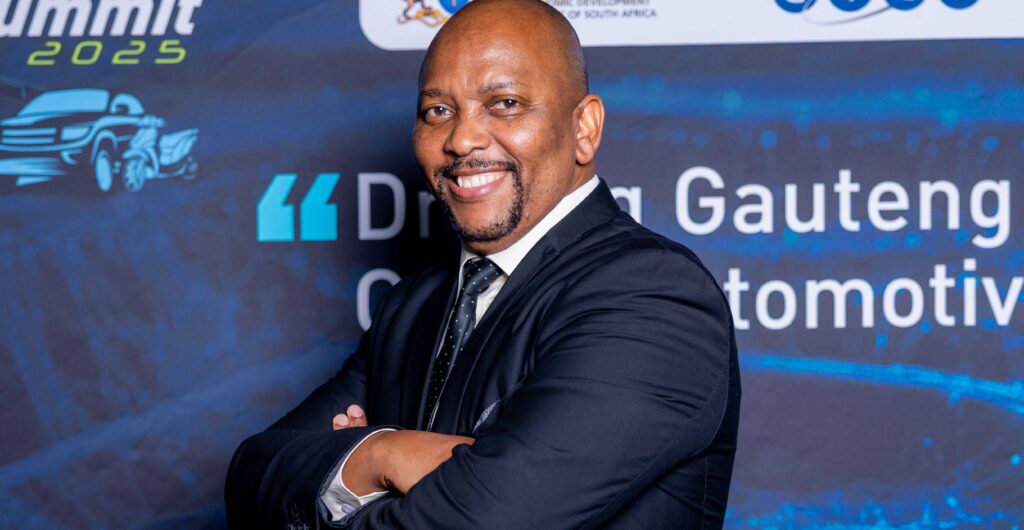
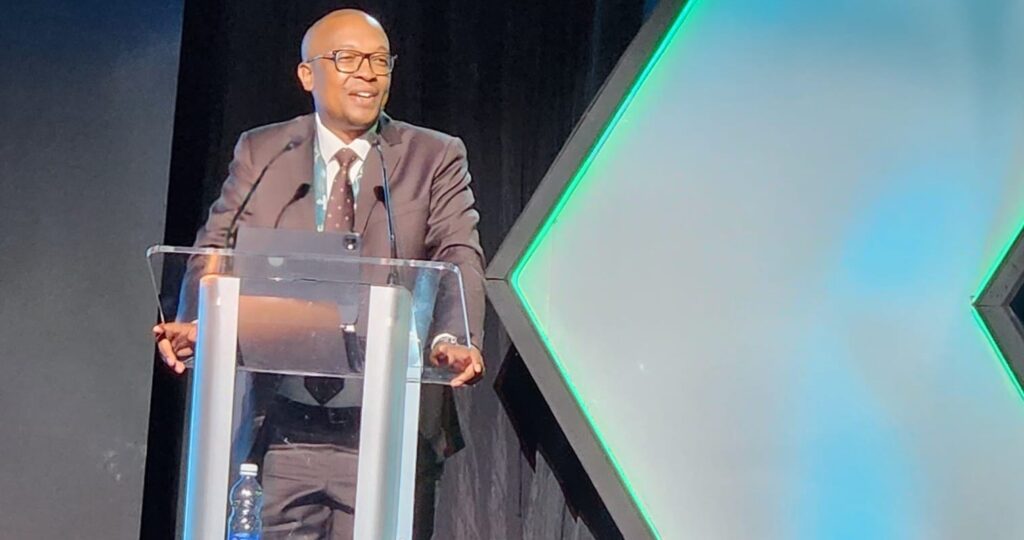
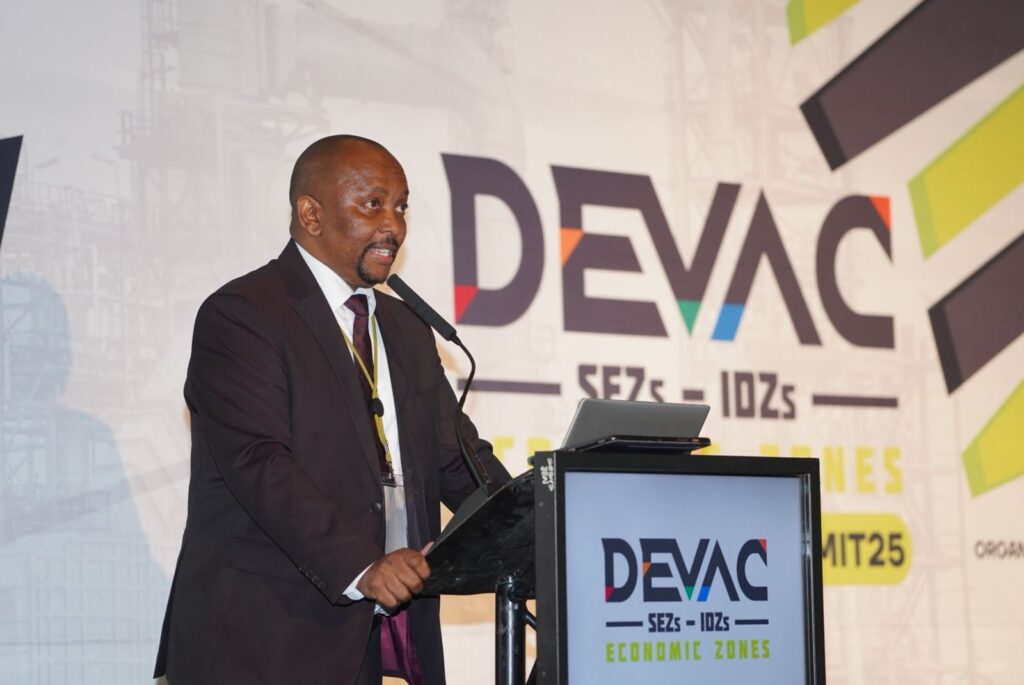
By Mandla Mpangase A summit focused on how economic zones can be a growth opportunity for South Africa gets underway in Durban, KwaZulu-Natal today. Taking place from 3 – 4 December 2025 under the theme “Transforming Africa’s economy: Catalysing growth and future investment by enhancing competitiveness through SEZ and IDZ projects”, the DEVAC Special Economic Zones/Industrial Development Zones Summit brings together governments, representatives from SEZs and IDZs, private-sector leaders, development experts, and global investors to map out the next era of Africa’s industrial expansion. The Tshwane Automotive Special Economic Zone (TASEZ) CEO Dr Bheka Zulu will be a key panellist on 4 December 2025 in a high-level discussion exploring how Africa can unlock greater value from its emerging automotive sector. Driving value addition and youth employment through innovation Dr Zulu will join the panel titled “Leveraging industrial clustering, 4IR, and Africa’s emerging auto sector to drive value addition and youth employment in SEZs”. The session will unpack how SEZs can accelerate industrialisation through advanced manufacturing, Fourth Industrial Revolution technologies, and integrated value chains – areas  in which TASEZ has rapidly positioned itself as a national leader. TASEZ has become South Africa’s fastest- growing automotive hub and a cornerstone of the country’s reindustrialisation agenda. Dr Zulu’s contribution to the panel is expected to provide practical insights into how SEZs can cultivate specialised skills, create youth employment, and attract sustainable investment by leveraging industrial clustering and global automotive trends. The discussion will be moderated by Prof. Joe Amadi-Echendu from the University of Pretoria’s Engineering and Technology Management faculty. Dr Zulu will be joined by a distinguished group of panellists, including: Nomvula Shongwe-Gulwako, Acting CEO, Royal Science and Technology Park, Eswatini Tapiwa Samanga, Group CEO, Production Technologies Association of South Africa (PtSA) Dr Luyolo Mabhali, Executive Cluster Manager: Future Production – Manufacturing, CSIR Anathi Mlungwana, Unit Head: Trade Facilitation, Coega Development Corporation Philip Krause, Consulting Manager: Transport, Pegasys Global Consulting Together, the panel will explore how economic zones can shift from traditional manufacturing to innovation-driven ecosystems that promote competitiveness, integrate regional value chains, and support Africa’s industrial ambitions. Unlocking the full potential of economic zones The summit itself underscores the growing importance of SEZs and IDZs in driving Africa’s economic future. These zones, designed to boost local industries, streamline investment processes, and enhance regional exports, are central to the continent’s efforts to compete in a rapidly evolving global economy. While SEZs and IDZs offer significant promise, their potential remains under-utilised due to challenges ranging from infrastructure gaps to regulatory complexity and limited financing. The summit aims to address these barriers by strengthening collaboration among governments, investors, and industry leaders. A strategic moment for Africa As global demand shifts toward greener manufacturing, digital transformation, and resilient supply chains, Africa’s economic zones—particularly in high-growth sectors like automotive production—are poised to play a defining role. Dr Zulu’s participation signals South Africa’s commitment to shaping that future, positioning TASEZ not only as a national success story but as a continental model for how innovation and industrial clustering can transform economies and create sustainable employment. The summit’s insights are expected to guide future investment, strengthen partnerships, and accelerate the development of competitive and globally connected economic zones across Africa.
Gauteng must ensure every rand derives tangible value and benefits for the people – MEC

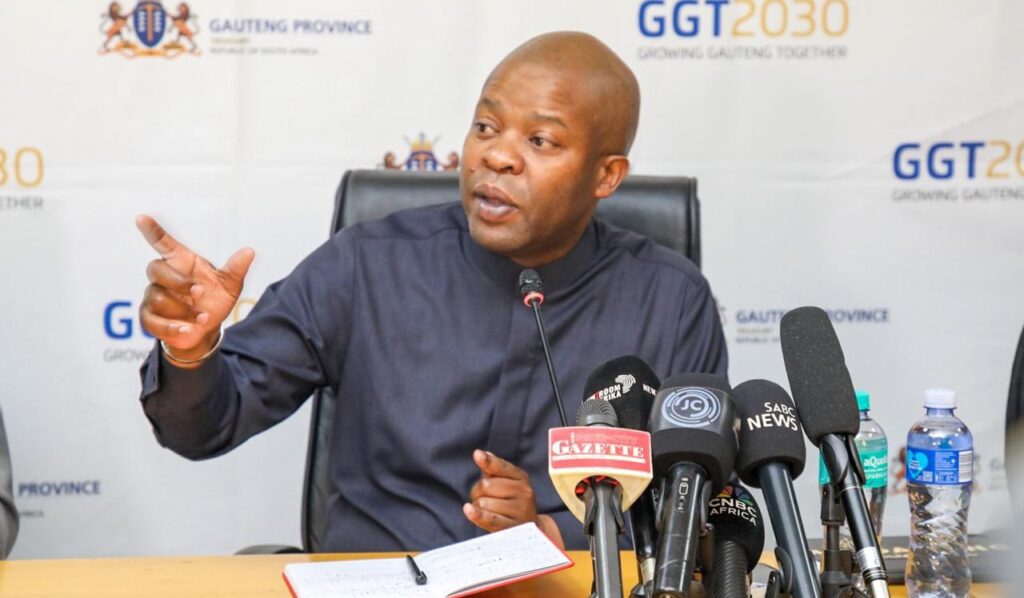
By Mandla Mpangase Infrastructure investment plays a pivotal role in economic development and job creation and contributes directly to the quality of life of our citizens, Gauteng MEC for Finance and Economic Development, Lebogang Maile, told the Gauteng Legislature during the tabling of the province’s medium-term policy statement and adjustment budget. Addressing the Legislature on 2 December 2025 Maile said that Gauteng must increase its investment in infrastructure and improve on robust infrastructure systems that support all provincial services including transport, health, education and social development.  “The Provincial Treasury has already introduced various measures to improve on the efficient and effective use of financial resources allocated for infrastructure projects,” MEC Maile said, adding that Instruction Notes have been issued as promised with the aim of responding to the needs of the intended beneficiaries and to prevent wasteful expenditure. “When we fail to deliver projects on time, within budget and to specifications inclusive of legislative compliance, we compromise on value for money.” Funding constraints meant that the provincial government had to intensify its efforts to secure alternative resource financing models. MEC Maile noted: “The high level of dependence on the provincial fiscus to fund infrastructure projects must also be addressed through the strengthening of cost recovery and exploring alternative funding sources.” More focus was being placed on consequence management of poorly performing service providers. “All provincial departments and entities are encouraged to work with the Provincial Treasury and other relevant stakeholders to prepare bankable applications for infrastructure projects that qualify for Budget Infrastructure Fund funding.” One key measure being taken was to focus on public-private partnerships as a vehicle to attract additional resources for infrastructure projects.  Maile pointed out that Gauteng’s economic output in 2024 reached R2.4-trillion, making the province the country’s economic hub, responsible for R33 out of every R100 the country’s economy produces. Gauteng, with KwaZulu-Natal, and Western Cape, contributes approximately 63% of South Africa’s GDP. “However, we understand that the economy of this province must record far higher growth rates to lift South Africa’s GDP, accelerate the creation of much needed jobs and reduce poverty,” Maile said. Economic overview It was against this backdrop that the provincial executive council recently approved the Gauteng City Region Economic Growth and Development Plan. The plan is intended to contribute to the three strategic priorities of inclusive economic growth and job creation; improved living conditions and enhanced health and well-being; and a capable, ethical, and developmental state. The strategy is anchored on 10 pillars: reindustrialisation through sector support; the promotion of trade and investment; spatial transformation and integration; economic and social infrastructure development; sustainable economic development; entrepreneurship and small business development support; skills of the future and workforce development; building state capacity; safety and security; and the development of corridors of regional integration. The cross-cutting pillars of the strategy are innovation and digital transformation; women, youth and people with disabilities; township procurement; and research and development. Gauteng City Region Economic Growth and Development Plan is also supported by 12 sector master plans to enable policies and strategies, including the Township Economy Development Act (and the Township Economy Revitalisation Strategy), the Informal Business Upliftment Strategy, the Medium, Small and Micro Enterprises Strategy, the Trade and Investment Strategy and Green Hydrogen. MEC Maile told the Legislature that the Department of Economic Development is currently hosting several sector roundtables which will culminate in the establishment of the 12 sector-specific action labs. “These action labs will act as multistakeholder collaborative and solution-oriented platforms to enhance the effectiveness and implementation of the strategy. “The effective implementation of this strategy will set Gauteng on a positive economic growth path and create much needed jobs, amid global headwinds and domestic economic challenges,” Maile said. “We are working in partnership with all key stakeholders to accelerate efforts to facilitate economic infrastructure development; trade and investment promotion; improve the ease of doing business; and empower micro, small and medium enterprises, particularly those owned by previously disadvantaged groups.” This will go a long way in enabling the province to close the current output gap, enhance production and significantly increase our participation in international markets, he explained. The MEC tabled the Medium-Term Budget Policy Statement 2025, the Adjusted Estimates of Provincial Revenue and Expenditure 2025, and the Adjusted Estimates of Capital Expenditure 2025 for consideration. A responsible balance “The national fiscal framework is aimed at ensuring a responsible balance between government spending, tax revenue, and borrowing to prevent unsustainable debt to create a stable environment for long-term growth, job creation and investment financing of public services,” Maile said. “As the provincial government, our fiscal trajectory reflects these national issues. That is why our focus is on debt management, revenue strategies, and spending restraint, while seeking alternative funding sources to meet increasing public service demands amidst weak economic performance.” The provincial five-year budget approach introduced in the previous financial year will be continued for the 2026 Medium-Term Expenditure Framework (MTEF) Budget with the aim of addressing high-level provincial risks and stabilising public finances. The principles guiding the 2026 MTEF Budget include: Protecting vulnerable members of our society; Realising efficiencies in the provincial procurement processes; Focusing on “ready-to-deliver” infrastructure projects; Funding accruals as a first charge against the department’s budget allocation; Reprioritising existing baselines to fund provincial priorities budget pressures or new funding requirements; Compensation of Employees budgets must remain within the limits set in the 2025 Budget; and Ensuring long-term fiscal sustainability through own revenue collection, alternative funding sources, trade-offs, downscaling or stopping programmes. “The goal of these principles is to stabilise provincial public finances by maintaining fiscal discipline and credibility and ensure impactful service delivery.” Adjustments budget The 2025/26 Adjustments Budget addresses pressures in frontline services, as a means of equipping the Gauteng Provincial Government to continue responding to the provincial imperatives underpinning the 2024 – 2029 MTDP and the G13 priorities. The total adjustment is R3.3-billion which includes the rollovers, national and provincial funding.  As part of this Adjustments Budget, an additional R2.2-billion has been allocated to provincial departments as follows: 

A key lesson from the 2025 G20 Summit: Industrialisation must power SA’s economic growth

As South Africa concludes its historic G20 Presidency, the first to be hosted on African soil, a clear message has emerged: the world is ready to recognise Africa as a central engine of shared prosperity, writes the Chairperson of the Tshwane Automotive Special Economic Zone, Maoto Molefane. We must make the most of the momentum. On the weekend of 22 and 23 November 2025, the G20 heads of states gathered in Johannesburg to endorse commitments that speak directly to the continent’s long-standing aspirations: equitable development, sustainable industrialisation, resilient economies, and fair participation in global trade. For South Africa, and for advanced industrial platforms like the Tshwane Automotive Special Economic Zone (TASEZ), this moment is far more than just a diplomatic symbolism, it is about the acceleration of economic growth to combat poverty and inequality, with industrialisation serving as a key driver of inclusive growth, job creation, and global competitiveness. The G20 2025 mandate President Cyril Ramaphosa’s closing message from the G20 Summit underscored the stakes. South Africa’s development needs – jobs for young people, robust infrastructure, energy security, thriving export industries – require global stability, inclusive growth and a level playing field. The G20 outcomes align directly with South Africa’s industrial ambitions: A new global approach to critical minerals ensures that mineral-rich countries like South Africa benefit from beneficiation at home – a key component of the localisation drive of the South African Automotive Masterplan 2035. Commitments to climate finance strengthen the foundation for a just energy transition that protects workers, communities, and industrial capacity – ensuring that South Africa becomes a sustainable and resilient country based on a green economy. Debt relief discussions aimed at freeing the liquidity of developing nations, thus enabling them to invest in critical infrastructure, skills development programmes and innovation – all of which are essential inputs of industrial expansion. Support for disaster-resilient economies, safeguarding industrial zones and supply chains from climate-related shocks. These are not abstract policy wins. They reshape the environment in which industrial zones like TASEZ operate: they unlock space for growth that is sustainable, technologically advanced and globally aligned. As President Ramaphosa said: “Together, we must accelerate progress towards the 2030 Sustainable Development Goals and the Pact for the Future. We have laid the foundation of solidarity. Now we must build the walls of justice and the roof of prosperity.” Industrialisation as an engine for growth Given that the 2025 G20 provided a strong voice for Africa, it must be noted that the continent has anchored the world’s supply chains for far too long without capturing its share of industrial value. “The greatest opportunity for prosperity in the 21st century lies in Africa,” President Ramaphosa said in his closing remarks. He described the continent as a driving force for future growth, innovation, mineral beneficiation, climate resilience and energy transition.  The 2025 G20 Declaration calls for structural reforms, investment mobilisation, and digital transformation that place industrialisation at the heart of global development priorities. What this means for South Africa is that the country must build, manufacture, innovate, export, and compete. This is the work TASEZ – Africa’s first automotive city – was created to do. Based in the country’s capital city, TASEZ is demonstrating what coordinated industrial policy can achieve: World-class manufacturing platforms supporting global automotive brands and their suppliers; Localisation programmes that deepen South Africa’s manufacturing base and stimulate small business participation; Green industrial infrastructure that positions the zone for the new energy and electric vehicle and hydrogen and solar economies; and Skills programmes that equip young people for advanced manufacturing and digital production. TASEZ is not just an industrial hub, it is a catalyst for economic resilience and can serve as a model for the equitable, future-oriented development highlighted in the G20 Declaration. Beneficiation is a must The global commitment to fair critical mineral development provides South Africa with a generational opportunity: to build integrated value chains centred on electric vehicles, battery manufacturing, renewable energy components and advanced materials. As the President noted, minerals must become “a source of prosperity and sustainable development in the countries that produce them”. This aligns perfectly with South Africa’s automotive transition strategy and TASEZ’s expansion into green manufacturing, downstream processing and high-value production clusters. The President called the 2025 summit the People’s G20, characterised by the engagement of business, labour, youth, scientists, mayors and civil society. This spirit of collaboration is the very essence of effective industrialisation and special economic zones implementation/development, both of which rely on coordinated action between government, investors, communities and workers. South Africa’s G20 success, combined with improving economic indicators and growing confidence in our reform programme, demonstrates that the country is ready for a new industrial chapter based not on extractive development, but a shared value, skills development, innovation, and sustainable manufacturing. Looking ahead As global leaders return home, the world’s attention shifts from diplomacy to delivery. For TASEZ, the task is to translate the political momentum of the G20 into practical industrial capacity. The Johannesburg G20 summit marks a critical turning point for global industrialisation, especially for Africa. The commitments around infrastructure, climate transition, and inclusive development resonate deeply with our vision to build a sustainable, high-tech automotive hub that benefits local communities, talents, and small industrial players. However, for this to be more than rhetoric, the world must translate pledges into concrete investment, local value-chain development, and support for medium, small, and micro enterprises. The timing could not be better, as TASEZ ratchets up its Phase 2 developments. TASEZ will be focused on: Attracting green manufacturing investments; Accelerating automotive and component localisation; Supporting small business entry into advanced value chains; Building human capital for future industries; Expanding export-ready industrial infrastructure; and Driving the beneficiation of minerals linked to electric vehicle and battery manufacturing. The G20 Summit has shown the world what South Africa can achieve when united by purpose. As President Ramaphosa said: “Let us move forward together, demonstrating to the world that we have the capacity to confront and overcome the world’s challenges. Through partnerships

How South Africa’s G20 Presidency can accelerate industrial growth through TASEZ

When South Africa welcomes the world to the G20 Leaders’ Summit this month, our nation will experience one of the most profound moments of global visibility since the country’s dawn of democracy, writes the CEO of the Tshwane Automotive Special Economic Zone (TASEZ), Dr Bheka Zulu. As heads of state, global CEOs, investors, and development partners converge on our shores for the G20 Leaders’ Summit on 22 and 23 November 2025, the world’s gaze will fall not only on our political leadership, but on our economic capability, our industrial resilience, and our readiness to take our place in a rapidly shifting global economy. For those of us tasked with building South Africa’s next-generation industrial platforms, this moment is far more than a diplomatic milestone. It is an opportunity to reshape the country’s industrial trajectory for decades to come. And for the Tshwane Automotive Special Economic Zone (TASEZ), it is a chance to demonstrate that South Africa can compete, innovate, and lead in one of the world’s most dynamic sectors: automotive manufacturing. South Africa in the global spotlight The G20 is not just a gathering of 20 world leaders. It is a year-long platform where global investment sentiment is shaped, where development financing agendas are debated, and where emerging markets like South Africa position themselves as credible partners in the global value chain. It has already triggered accelerated investments in infrastructure, logistics, and city improvement projects, particularly in Gauteng. This matters for industrial zones like TASEZ. Better roads, more reliable energy, and upgraded transport networks are the lifeblood of manufacturing competitiveness. But the physical changes are only part of the story. The more significant shift is reputational. A successful G20 presidency can strengthen investor confidence, deepen trust in our economic institutions, and position South Africa as a stable, future-oriented industrial hub. That alone makes this moment essential for TASEZ and the broader automotive sector. Global industrial priorities What excites me is how closely South Africa’s G20 priorities align with TASEZ’s mission. The 2025 agenda focused on: Financing the just energy transition Inclusive industrialisation Sustainable development The role of critical minerals Mobility and climate resilience These are not abstract ideas, they cut to the heart of the automotive industry’s transformation. As highlighted by the recent New Energy Summit held in Gauteng in October 2025, global value chains are pivoting to green mobility, clean manufacturing, and Africa’s integration into supply networks. TASEZ is uniquely positioned in this transition. We are already home to one of Africa’s most dynamic automotive production ecosystems, and we are preparing for a future that includes electric mobility, deeper localisation, and expanded supplier development. If South Africa leverages its G20 presidency effectively, we can secure the policy tools, partnerships, and financing mechanisms needed to accelerate this transition. Showcasing South Africa’s successes The world will not judge us by speeches alone. They will judge us by what we build. This is why TASEZ intends to use the G20 window to demonstrate what coordinated public–private investment can achieve. As the fastest-growing automotive special economic zone (SEZ) on the continent, we have a compelling story to tell — one of job creation, skills development, township inclusion, supplier growth, and industrial expansion. We should be bold in inviting foreign delegations, development finance institutions, and global OEMs to see the zone firsthand. Site visits, technical tours, and bilateral industry roundtables can turn interest into investment. The G20 gives us a once-in-a-generation platform to do this at scale. The G20 Leaders’ Summit will bring renewed attention to Africa’s role in the global economy. For TASEZ, this is an opportunity to expand its influence beyond South Africa’s borders. Through stronger relationships with the Southern African Development Community (SADC) and African Union partners, we can position TASEZ as a catalyst for regional automotive value chains — a future where components made in Botswana, Mozambique, Zambia, or Zimbabwe flow seamlessly into assembly lines in Tshwane. More than symbolic South Africa must convert visibility into tangible improvements in industrial competitiveness. We must guard against the tendency to treat major summits as symbolic rather than strategic. Investment is not secured by banners, speeches, or social media clicks. It is secured by credibility, efficiency, transparency, and delivery. For TASEZ, this means: strengthening governance; accelerating infrastructure development; ensuring investor facilitation is world-class; and delivering certainty around timelines, incentives, and operations. The 2025 G20 Summit is a strategic opportunity for South Africa to reposition itself as the continent’s industrial leader, providing a platform for government, business, and development partners to act with unity. For TASEZ, it is a chance to amplify what we already know: that South Africa can build globally competitive manufacturing hubs; that our people can produce world-class automotive products; and that, with the right partnerships, we can transition into the mobility future with confidence. The world is coming to South Africa. Will we use this moment to shape our industrial destiny? We at TASEZ intend to do just that.

The green shoots of an economic recovery

In his weekly newsletter published on 17 November 2025, President Cyril Ramaphosa wrote that in the week of the G20 Leaders’ Summit – the first to be held on African soil – South Africa is able to showcase a country and an economy on the rise. In the week that we prepare to host the first summit of the G20 on African soil, we are able to showcase a country and an economy on the rise. A number of key economic indicators and developments in the past week point to the green shoots of an emerging economic recovery. Unemployment is down. Data from Statistics South Africa show that the official unemployment rate fell to 31.9% between July and September this year, down from 33.2% recorded in the previous quarter. Nearly 250 000 more people were in employment in the third quarter. Of these, around 130 000 were added in the construction sector. The Medium-term Budget Policy Statement delivered last week points to a sustained turnaround in government finances. We are on track to achieve a third consecutive primary budget surplus. This means that, excluding interest payments on our debt, we are collecting more in revenue than we are spending. This is a sign of prudent financial management, giving us space to steadily reduce our debt to sustainable levels. Also last week, our sovereign credit rating was upgraded by S&P. This is the first such upgrade from the agency in nearly two decades. An improved rating generally leads to lower borrowing costs, which allows for more funds to be invested in the economy and in meeting social needs. Among the factors S&P cited for the positive outlook were Eskom’s improved performance, strong tax collection and the broad structural reform momentum having ‘picked up pace’. When we established Operation Vulindlela in 2020 as a government coordinating mechanism to implement transformative reforms and boost economic growth, the initial focus was on the network sectors as well as immigration reform. We are seeing steady progress in the logistics sector, notably with respect to improved performance at our ports. Measures to allow private sector companies to operate on the national freight rail network are also at an advanced stage. The most noteworthy improvements have been witnessed in the energy sector, with Eskom now on the road to recovery, massive investment in renewable energy generation, and vastly improved electricity supply. In support of South Africa’s ratings upgrade, S&P cited the recently launched Phase II of Operation Vulindlela, which is focusing on changes in local government, digital transformation, visa regimes, spatial inequality and others. Modelling from the University of Stellenbosch’s Bureau of Economic Research (BER) has estimated that the potential impact of the Operation Vulindlela reforms could lift South Africa’s long-term growth rate by as much as 3.5% when fully implemented. In citing this modelling, the analyst JP Landman writes that “the reforms are a journey, but they have started working. Step by step, South Africa is opening its economy, modernising infrastructure and rebuilding credibility”. Despite considerable headwinds that have including a global pandemic, a debilitating energy crisis and more recently, a difficult global trade environment, we have stayed the course on economic recovery and are now seeing this pay off. Following a ruinous period of economic stagnation and capture of the state, we have been able to achieve sustained progress in a relatively short period of time. This is in no small part owing to the strength of the partnerships forged between government, business, labour and civil society. These far-reaching economic changes have a direct and material impact on the lives of every South African, on their ability to lead dignified lives, to access public services, to secure employment, and to provide for their families. We are determined to sustain the momentum of this economic recovery, so that we can drive inclusive growth, create jobs and improve the lives of our citizens.

TASEZ shows how SA can build an economy that works for all

By Mandla Mpangase Every South African knows that when infrastructure fails, life becomes harder. Jobs disappear. Businesses relocate. Communities lose hope. But when infrastructure works, everything else begins to work too. Factories stay open. Investors arrive. That is the import of the speech given on 13 November 2025 by President Cyril Ramaphosa at the National Construction Summit held in Kempton Park, Ekurhuleni. “We are a gathered here not just to talk about building an industry, but to build a nation,” the president said, adding: “We are gathered here to share a dream and determination to build a country that works for all its people. South Africa’s national economic drive has never been only about building structures; it has always been about building a country that gives every person a fair chance – something clearly articulated in the National Development Plan (Vision 2030). And the message has been clearly stated through the years of democracy. “From a social development perspective, infrastructure provides people with what they need to thrive,” President Ramaphosa told the summit participants. “It improves the quality of life and can play a key role in reducing inequality. Through reliable infrastructure we can boost productivity and reduce costs of living.” It also provides countries with what they need to grow and develop. “Infrastructure facilitates trade and commerce. When we boost infrastructure through the construction industry we attract investment.” And few places capture this mission more clearly than the Tshwane Automotive Special Economic Zone (TASEZ). Where infrastructure becomes industrial strength “Infrastructure is the backbone of development because, among many other reasons, it bolsters economic competitiveness and sustainability. Without infrastructure economic growth slows down, inequality deepens and the quality-of-life declines,” Ramaphosa said. For years, underinvestment in roads, rail and logistics has held back the key sectors of mining, agriculture, and manufacturing. But South Africa is now shifting course. As the president pointed out: “Infrastructure is poised to once again become the flywheel of the economy. Infrastructure investment is one of the most effective levers for stimulating economic activity.” This is evident in the employment figures released by Statistics SA earlier this week. The latest Quarterly Labour Force Survey released by Statistics South Africa in November 2025 indicates a decrease in the official unemployment rate from 33.2% in the second quarter of this year to 31.9% in the third quarter. Employment increased by 248 000 in the third quarter, with construction the largest contributor with 130 000 new jobs. This is not an accident. It is the result of a deliberate national effort to turn infrastructure into a growth engine. And TASEZ is one of the clearest examples of what that looks like in practice. The special economic zone (SEZ) is proof that when investment is made in the right infrastructure such as reliable power, efficient logistics, modern digital systems, further investment is made, jobs are created, and industrial capability is strengthened. TASEZ is where South Africa’s automotive future is being built, factory by factory, with global manufacturers choosing the Tshwane SEZ because the fundamentals are already in place. A model for inclusive growth The zone is succeeding not only because of its industrial strength but because of its social impact. It is bringing economic activity to communities long left on the periphery. It is creating opportunities for young people entering technical fields. It is giving small businesses a stake in a globally competitive value chain. As TASEZ CEO, Dr Bheka Zulu, notes: “When we talk about spatial redress, this is what it looks like: development that doesn’t speak about communities but works with them.” Towards investment Government has committed R1-trillion in infrastructure spending over the medium term, alongside reforms to unlock greater private investment. Procurement war rooms, new public-private partnership guidelines and accountability frameworks are designed to ensure that projects do not stall but move quickly from planning to ground-breaking. As the world prepares to join South Africa for the G20 Leaders’ Summit, the country is showing what renewal looks like on the ground. Roads being rebuilt. Industrial zones like TASEZ expanding. If this momentum is sustained, TASEZ will not be the exception but the blueprint, demonstrating what is possible when strong infrastructure, a capable state and committed investors come together.  

NEV Summit sets clear direction for South Africa’s green mobility future

By Mandla Mpangase Day 1 of the New Energy Vehicles Summit provided much to think about. The opening day of the inaugural New Energy Vehicle (NEV) Summit in Midrand proffered a compelling combination of insights, inspiration and strategic direction, positioning South Africa, and Gauteng in particular, as a frontrunner in Africa’s transition to sustainable mobility. From the science behind hydrogen and battery-powered vehicles to the policies shaping South Africa’s green mobility roadmap, Day 1 covered a broad spectrum of issues. Delegates explored global trends, drew lessons from international case studies, including from China, and examined local readiness across policy, skills, and industry. In his summary remarks on the day, the CEO of the Tshwane Automotive Special Economic Zone (TASEZ), Dr Bheka Zulun, noted that the discussions were “not just about dialogue, but about direction”. Every presentation, he said, “was the emergence of a shared vision; one that sees South Africa transitioning into sustainable mobility and industrial renewal”. Gauteng, as the country’s industrial heartland, was described as playing a strategic role in the future of the automotive ecosystem, leveraging its strong logistics infrastructure and manufacturing base to attract investment and drive innovation. “Today affirmed South Africa’s readiness to lead Africa’s green mobility future,” Dr Zulu added. “The key message was about collaboration – between government, industry, academia, and innovators – to create jobs, empower small, medium and micro enterprises, and localise technology.” Dr Zulu likened this collaboration to a relay race, where each participant contributes their unique strength at different stages: “It’s not about competition, but coordination, knowing when and how to pass the baton to build momentum together.” Throughout the day, recurring themes included industrial transformation, skills development, and ensuring that technology and labour advance together for a just transition. Speakers also emphasised policy clarity and investment confidence, highlighting growing optimism in the local NEV manufacturing sector. The province called for “urban-driven industrialisation” that integrates energy policy, investment frameworks, and urban planning, aligning Gauteng’s innovation and logistics strengths to create a globally competitive green automotive hub. As the day concluded, participants agreed that the NEV revolution “is no longer a possibility, but a present reality”, and that South Africa’s leadership must act boldly and decisively to harmonise policy, infrastructure, and workforce development. “Our NEV transition is not a single-sector effort – it’s a national movement,” Dr Zulu emphasised. “We must plan boldly, invest bravely, and move together to make Gauteng cleaner, smarter, greener, and more connected.”

South Africa’s auto industry holds advantage in Africa, Says Minister Tau

By Mandla Mpangase South Africa’s automotive industry continues to anchor the country’s manufacturing capacity and offers a “unique competitive advantage” on the African continent, despite facing significant global and domestic headwinds. This was the message from Minister of Trade, Industry and Competition, Parks Tau, addressing delegates at South Africa Auto Week 2025, hosted by naamsa (The Automotive Business Council) in Gqeberha from 1–3 October. Tau said that while the sector has weathered one of its most challenging periods over the past nine months, it remains one of the cornerstones of South Africa’s economy. “In 2024, the industry contributed 5.2% to GDP and accounted for 22.6% of total manufacturing output. It provides nearly 500 000 formal jobs across assembly, components, retail and services, while supporting around one million livelihoods,” he told delegates. New markets and partnerships Tau highlighted fresh opportunities emerging on the continent and beyond. Following recent engagements in Saudi Arabia and Nigeria, he said South African component manufacturers could partner with counterparts in those countries to expand their footprint. “We’re prepared to allow African investors to partner with our local companies and create manufacturing capacity in those markets. It is an opportunity we must take advantage of,” Tau explained. At the same time, global OEMs operating in South Africa have committed to transitioning from semi-knockdown to complete knockdown production, deepening local manufacturing capacity. “Our duty is to work with these companies to ensure they become part of the local production base, taking advantage of South Africa’s skills and positioning the country as a platform for access to African markets,” Tau added. Transition to new energy vehicles The minister stressed that the industry is at a critical “inflection point” as global markets accelerate their shift away from fossil fuel vehicles towards new energy vehicles (NEVs). With major export destinations such as the European Union and the United Kingdom moving to ban new petrol and diesel vehicles from 2035, South Africa must adapt or risk losing market share.   Already, the shift is under way: in 2024, South Africa recorded 15 600 new energy vehicle sales, representing 3% of the local market. The sector also attracted R12-billion in new investment for NEV-related manufacturing. Government has introduced measures to support this transition, including a 50% tax deduction for qualified NEV investments, partnerships with universities and research institutions, and strategies to localise production of critical inputs such as battery materials. “This is not just an industrial project,” Tau said. “It is about positioning South Africa at the heart of the global mobility revolution, not as a taker of technology, but as a maker. If we succeed, we will safeguard exports, create jobs, and place Africa at the forefront of clean mobility solutions.” Africa as an engine of growth Africa has emerged as a key market, with the continent becoming South Africa’s second-largest export destination in 2024. Vehicle exports into Africa grew by 12.4% year-on-year to R48.1-billion. The African Continental Free Trade Area (AfCFTA) is expected to further unlock opportunities, from reducing logistics costs to enabling vehicle assembly across the continent. Beyond vehicles, Tau noted, it could also drive mineral beneficiation, particularly for critical minerals such as cobalt, graphite, and lithium essential for the NEV transition. “Together, Africa can build a battery industry that reduces dependence on imports and positions the continent as a hub for clean mobility,” he said, adding that South Africa is leading the development of an African automotive hub that could align policies and attract investment. In closing, Tau emphasised that South Africa’s auto sector, with its industrial depth and mineral wealth, is uniquely positioned to lead Africa’s role in the global energy transition. “The automotive sector has been at the heart of our industrial story for more than a century. Today, it stands at a defining moment. “Its transition to new energy vehicles will define our relevance in a low-carbon world, while its integration into Africa’s free trade area positions us as leaders on the continent,” he said. “If we seize this opportunity, we will not only secure South Africa’s competitiveness but also place Africa at the forefront of the global mobility revolution.”

Auto manufacturing leaders urge action on investment

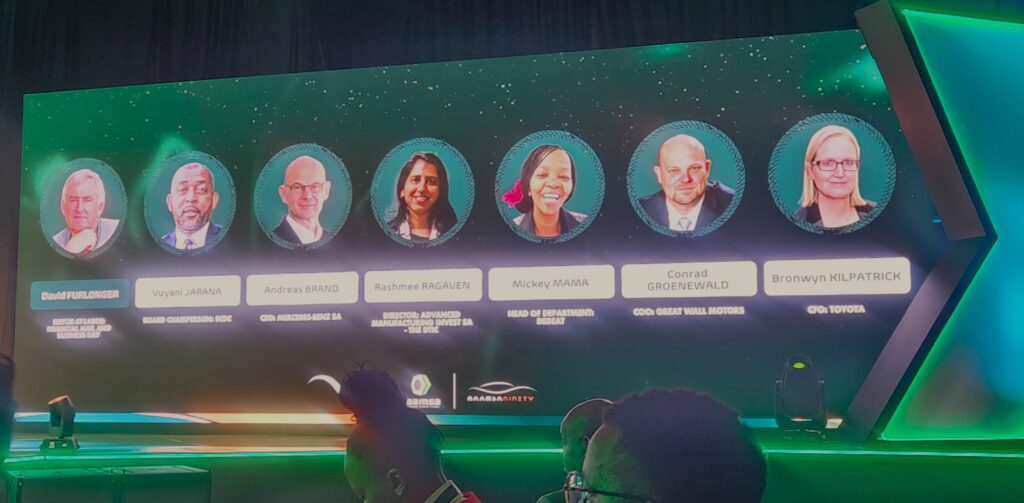
By Mandla Mpangase South Africa’s automotive sector, a key industry for the country’s economy, faces losing ground globally unless decisive action is taken to attract and retain new investment. This was the central message of a high-level panel discussion at South African Auto Week 2025 taking place in Gqeberha from 1 October 2025. This year’s South Africa Auto Week, hosted by the Automotive Business Council (naamsa), is being held under the theme “Reimagining the future together – Cultivating inclusive growth and shared prosperity”. The panel, moderated by Financial Mail and Business Day editor-at-large David Furlonger tackled the topic “Salient ingredients to attract new investment for auto manufacturing in South Africa”. Furlonger opened the discussion with a stark reminder: while global markets are making inroads with new energy vehicles, South Africa lags behind. “We are very good at coming up with plans, but not so great at implementing them,” he warned. “Now we need action.” Policy and incentives The director of advanced manufacturing at Invest SA, an agency of the Department of Trade, Industry and Competition, Rashmee Ragaven, outlined a suite of government programmes, including the Automotive Production and Development Programme and the Automotive Investment Scheme, that have been designed to support manufacturers Ragaven stressed the importance of partnerships between government and industry, and the role of free trade agreements, skills development, and special economic zones such as the Tshwane Automotive Special Economic Zone based in Gauteng, and the Eastern Cape’s industrial development zone of Coega in anchoring investment. But Ragaven acknowledged speed is critical to bringing about any change. “The partnerships are there, but the speed of action is even more critical now than ever before.” The Eastern Cape scenario CEO of the Eastern Cape Development Corporation, Ayanda Wakaba, highlighted the vulnerability of the province’s automotive industry, long a hub for OEMs such as Mercedes-Benz and VW. “The market dynamics have shifted so much that establishing an industrial plant today is very different to before. “We must benchmark ourselves against what other countries are doing,” he said. While defending the sector remains essential, Wakaba stressed the need to diversify into new industries and leverage digital infrastructure investments in rural areas to broaden economic opportunities. A call for action For Andreas Brand, CEO of Mercedes-Benz SA, the formula is simple: action. He pointed to Mercedes-Benz’s investments in solar energy and skills development through its learning academy as proof that collaboration with government can deliver results. “Without acting, theory never hits reality,” he said. “We need robust, constructive engagement and specific actions that all parties adhere to. That is what delivers change.” Mickey Mama, head of department at the Eastern Cape’s Department of Economic Development, Environmental Affairs and Tourism, drew comparisons with Morocco and Eastern Europe, both of which have surged ahead of South Africa in attracting investment. “Our municipalities take too long to approve applications. Morocco has a turnaround time that outpaces us completely,” Mama said, warning that red tape and a lack of policy clarity on NEVs risked pushing investment elsewhere. Chinese brands on the lookout for opportunities South Africa is also facing a wave of interest from Chinese automotive brands, but obstacles remain. Conrad Groenewald, COO of Great Wall Motors, noted that while Chinese firms are eager to invest outside of China, South Africa’s current policies make it hard to justify the return on investment. “We compete globally. South Africa is already at a disadvantage being at the tip of Africa. We need policies that allow reasonable returns for investors,” he said. Groenewald also cautioned that rising import duties and the potential removal of import credit benefits would hurt consumers and deter new entrants. “Vehicle pricing has already outpaced earnings. If policies change further, it will make it even harder to do business here,” he warned. Need to strengthen component supplier base Bronwyn Kilpatrick, CFO of Toyota, stressed the urgent need to strengthen South Africa’s tier two and tier three supplier base. “In South Africa, our manufacturing pyramid is inverted. Only 20% of value-add comes from local tier two and three suppliers. In Thailand, it’s the opposite, and it’s driven by targeted incentives,” she explained. Developing smaller suppliers, however, requires long-term commitment, mentorship, and patient capital, she added. The time to act is now Across the panel, one complex theme emerged: the need for clear policy, faster implementation, and real partnerships to support both OEMs and suppliers. As Ragaven concluded: “There is a shift in mindset in government, but speed is critical. We cannot afford to wait any longer.” South Africa’s automotive sector, which contributes nearly 5% to GDP and supports hundreds of thousands of jobs, now faces a defining moment. Competing nations like Morocco, Thailand, and Eastern Europe have shown what decisive policy and execution can achieve. South Africa must act – and it must act now – to translate its world-class skills and its hard-earned manufacturing expertise into a future-ready industry.

One-Stop Shop for investors launched in Tshwane

A new InvestSA One-Stop Shop has opened in the City of Tshwane to assist investors to speed up their new businesses or projects and cut bureaucratic red-tape. The centre, based at the Tshwane Economic Development Agency (TEDA) offices in Centurion, is part of the government’s drive to become investor friendly by improving the business environment by lowering the cost of doing business and making the process easier. The official opening, on 23 September 2025 highlighted the last drive by the City of Tshwane in attracting investors to support its infrastructure development and local economic growth, and is in keeping with its #TshwaneRising campaign. The one-stop shop, which aims to improve the ease of doing business, attract and retain investment, thereby creating jobs and supporting the City’s economic revitalisation, is the result of a strategic partnership between the Department of Trade, Industry and Competition, the Gauteng Growth and Development Agency, and TEDA. It is also an important development for the Tshwane Automotive Special Economic Zone, providing another platform to showcase the TASEZ business case for investors. The City of Tshwane’s executive mayor Dr Nasiphi Moya noted that the launch of the centre came just weeks after the City’s investment summit. The one-stop shop is an important facility in helping the investors who made pledges to the tune of more than R16-billion at the summit. Dr Moya reiterated the City’s ambitious plans encapsulated in the Tshwane Economic Revitalisation Strategy, which has plotted the roadmap of empowering the City through creating more than 80 000 jobs, attracting up to R26-billion in new investment, and achieving a growth rate of 4% within the next five years. The latest Statistics South Africa data confirms that the City of Tshwane is making significant progress. It has shown a 4.5% decrease in unemployment, driven by the city creating more jobs than any other metro. “This shows that Tshwane is rising,” the MMC for Economic Development and Spatial Planning Sarah Mabotsa said. The City of Tshwane has identified 11 key economic sectors, with the automotive manufacturing sector sitting at the top of that list. TASEZ, which is based in the east of the City of Tshwane, is a prime example of what investment can do in boosting the local and provincial economy, providing jobs for township businesses and individuals, transforming both the sector and the economy, and promoting skills development and innovation. With the launch of Phase 2 and the development of logistics infrastructure, TASEZ now provides new avenues for investors to explore, further enhancing Tshwane’s role as a hub of innovation, manufacturing and trade. These initiatives are not only creating jobs today but also laying the foundation for long-term prosperity. “We need to agree on the vision that we have for the future of this city and its people,” said Moya.