Tasez

MEC Gauteng economic development

Gauteng must ensure every rand derives tangible value and benefits for the people – MEC

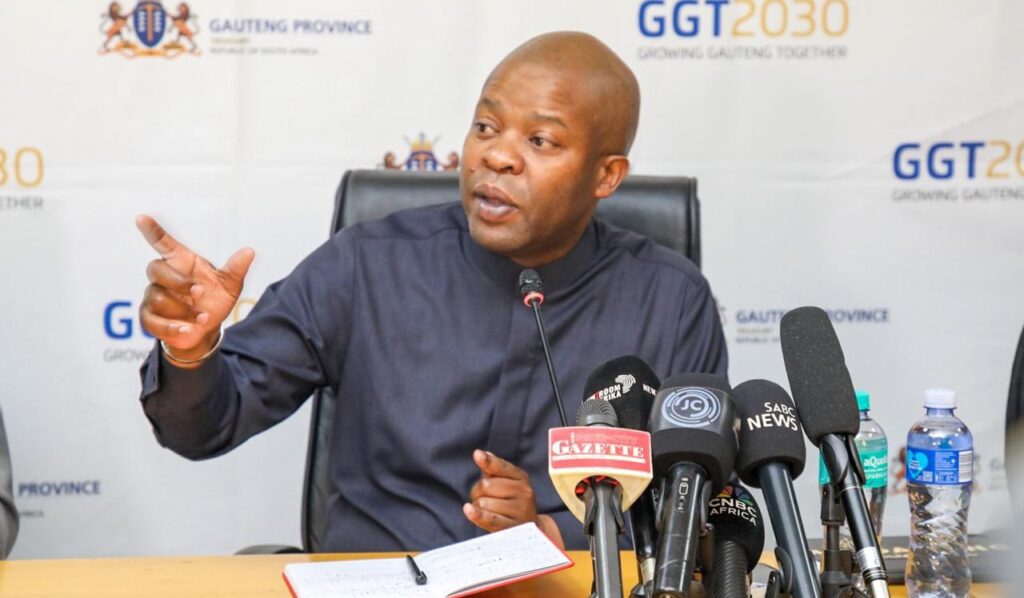
By Mandla Mpangase Infrastructure investment plays a pivotal role in economic development and job creation and contributes directly to the quality of life of our citizens, Gauteng MEC for Finance and Economic Development, Lebogang Maile, told the Gauteng Legislature during the tabling of the province’s medium-term policy statement and adjustment budget. Addressing the Legislature on 2 December 2025 Maile said that Gauteng must increase its investment in infrastructure and improve on robust infrastructure systems that support all provincial services including transport, health, education and social development.  “The Provincial Treasury has already introduced various measures to improve on the efficient and effective use of financial resources allocated for infrastructure projects,” MEC Maile said, adding that Instruction Notes have been issued as promised with the aim of responding to the needs of the intended beneficiaries and to prevent wasteful expenditure. “When we fail to deliver projects on time, within budget and to specifications inclusive of legislative compliance, we compromise on value for money.” Funding constraints meant that the provincial government had to intensify its efforts to secure alternative resource financing models. MEC Maile noted: “The high level of dependence on the provincial fiscus to fund infrastructure projects must also be addressed through the strengthening of cost recovery and exploring alternative funding sources.” More focus was being placed on consequence management of poorly performing service providers. “All provincial departments and entities are encouraged to work with the Provincial Treasury and other relevant stakeholders to prepare bankable applications for infrastructure projects that qualify for Budget Infrastructure Fund funding.” One key measure being taken was to focus on public-private partnerships as a vehicle to attract additional resources for infrastructure projects.  Maile pointed out that Gauteng’s economic output in 2024 reached R2.4-trillion, making the province the country’s economic hub, responsible for R33 out of every R100 the country’s economy produces. Gauteng, with KwaZulu-Natal, and Western Cape, contributes approximately 63% of South Africa’s GDP. “However, we understand that the economy of this province must record far higher growth rates to lift South Africa’s GDP, accelerate the creation of much needed jobs and reduce poverty,” Maile said. Economic overview It was against this backdrop that the provincial executive council recently approved the Gauteng City Region Economic Growth and Development Plan. The plan is intended to contribute to the three strategic priorities of inclusive economic growth and job creation; improved living conditions and enhanced health and well-being; and a capable, ethical, and developmental state. The strategy is anchored on 10 pillars: reindustrialisation through sector support; the promotion of trade and investment; spatial transformation and integration; economic and social infrastructure development; sustainable economic development; entrepreneurship and small business development support; skills of the future and workforce development; building state capacity; safety and security; and the development of corridors of regional integration. The cross-cutting pillars of the strategy are innovation and digital transformation; women, youth and people with disabilities; township procurement; and research and development. Gauteng City Region Economic Growth and Development Plan is also supported by 12 sector master plans to enable policies and strategies, including the Township Economy Development Act (and the Township Economy Revitalisation Strategy), the Informal Business Upliftment Strategy, the Medium, Small and Micro Enterprises Strategy, the Trade and Investment Strategy and Green Hydrogen. MEC Maile told the Legislature that the Department of Economic Development is currently hosting several sector roundtables which will culminate in the establishment of the 12 sector-specific action labs. “These action labs will act as multistakeholder collaborative and solution-oriented platforms to enhance the effectiveness and implementation of the strategy. “The effective implementation of this strategy will set Gauteng on a positive economic growth path and create much needed jobs, amid global headwinds and domestic economic challenges,” Maile said. “We are working in partnership with all key stakeholders to accelerate efforts to facilitate economic infrastructure development; trade and investment promotion; improve the ease of doing business; and empower micro, small and medium enterprises, particularly those owned by previously disadvantaged groups.” This will go a long way in enabling the province to close the current output gap, enhance production and significantly increase our participation in international markets, he explained. The MEC tabled the Medium-Term Budget Policy Statement 2025, the Adjusted Estimates of Provincial Revenue and Expenditure 2025, and the Adjusted Estimates of Capital Expenditure 2025 for consideration. A responsible balance “The national fiscal framework is aimed at ensuring a responsible balance between government spending, tax revenue, and borrowing to prevent unsustainable debt to create a stable environment for long-term growth, job creation and investment financing of public services,” Maile said. “As the provincial government, our fiscal trajectory reflects these national issues. That is why our focus is on debt management, revenue strategies, and spending restraint, while seeking alternative funding sources to meet increasing public service demands amidst weak economic performance.” The provincial five-year budget approach introduced in the previous financial year will be continued for the 2026 Medium-Term Expenditure Framework (MTEF) Budget with the aim of addressing high-level provincial risks and stabilising public finances. The principles guiding the 2026 MTEF Budget include: Protecting vulnerable members of our society; Realising efficiencies in the provincial procurement processes; Focusing on “ready-to-deliver” infrastructure projects; Funding accruals as a first charge against the department’s budget allocation; Reprioritising existing baselines to fund provincial priorities budget pressures or new funding requirements; Compensation of Employees budgets must remain within the limits set in the 2025 Budget; and Ensuring long-term fiscal sustainability through own revenue collection, alternative funding sources, trade-offs, downscaling or stopping programmes. “The goal of these principles is to stabilise provincial public finances by maintaining fiscal discipline and credibility and ensure impactful service delivery.” Adjustments budget The 2025/26 Adjustments Budget addresses pressures in frontline services, as a means of equipping the Gauteng Provincial Government to continue responding to the provincial imperatives underpinning the 2024 – 2029 MTDP and the G13 priorities. The total adjustment is R3.3-billion which includes the rollovers, national and provincial funding.  As part of this Adjustments Budget, an additional R2.2-billion has been allocated to provincial departments as follows: 
Gauteng takes the wheel: Driving Africa’s NEV future

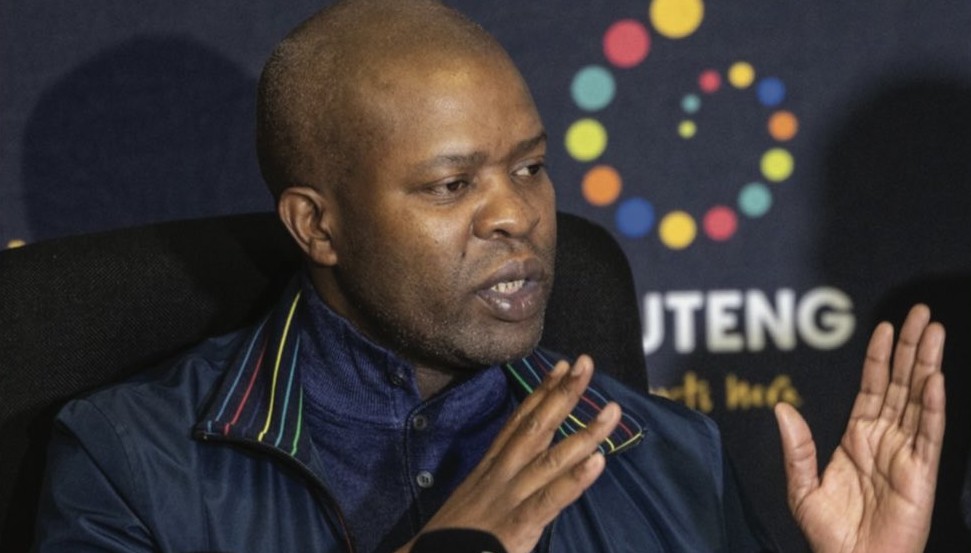
South Africa’s shift to green mobility is no longer a distant idea, it is now a commercial necessity, and the economic heartland of the country must take the lead in embracing New Energy Vehicles as a core economic sector for the country – and the rest of Africa, writes Lebogang Maile, Gauteng MEC for Finance and Economic Development. Gauteng is stepping up to lead South Africa, and Africa, into the new-energy vehicle (NEV) era. The province, already the country’s economic and industrial centre, is positioning itself as the continent’s NEV hub. The province is set to host its inaugural NEV Summit on 22–23 October 2025, during the country’s Transport Month, under the auspices of the Gauteng Growth and Development Agency, along with the Automotive Industry Development Centre (AIDC) and the Tshwane Automotive Special Economic Zone (TASEZ). South Africa’s shift to green mobility is no longer a distant idea, it is now a commercial necessity. Global markets, particularly the European Union, are tightening carbon regulations. For South Africa to keep exporting vehicles and stay competitive, it must move fast to build an industry that produces low- and zero-emission cars. Laying the foundation The transition is backed by strong policy frameworks. The South African Automotive Master Plan 2035 (SAAM 2035) sets clear goals for increasing local content, boosting exports, and creating inclusive growth. The government’s White Paper on electric vehicles, approved at the end of 2023, provides a roadmap for building the NEV ecosystem from production and charging infrastructure to skills development and consumer incentives. Although the paper references electric vehicles, South Africa must take account of other green initiatives such as hydrogen and battery. The policy direction is clear – our job is to make sure Gauteng becomes the first mover. The NEV transition is about jobs, skills, and industrialisation not just greener cars. We are ready to lead Africa in this journey. Gauteng: South Africa’s economic hub South Africa’s economic hub has all the right ingredients: skilled workers, advanced manufacturing infrastructure, financial and logistics networks, and a strong automotive heritage. Ford, based in the City of Tshwane, has been in South Africa for over a century. Gauteng’s existing automotive value chain makes it the natural home for Africa’s NEV future. The province already hosts major original equipment manufacturers like BMW, Ford, Nissan, Tata and Iveco, and supplier networks that can pivot to battery, electronics, and component manufacturing. We already have the backbone, from vehicle assemblers to tiered suppliers. What we are doing now is aligning that value chain with new technologies, from battery assembly to software integration. The transition is not just about attracting investment; it’s about future-proofing Gauteng’s manufacturing economy. Turning policy into factories Gauteng is now focused on turning national policy into tangible projects. The Automotive Investment Scheme (AIS) and new EV production incentives announced by the Department of Trade, Industry and Competition (the dtic), including a 150% investment allowance for qualifying projects, are key tools to make that happen. We are working closely with the dtic and industry stakeholders to streamline approvals and remove red tape. Investors do not want promises, they want certainty. Gauteng is offering that – a clear pathway from policy to plant. But we are also well aware of the challenges we face, from electricity reliability and logistics to the high costs of new technologies. One of the key projects we have put in place to overcome these, is the creation of a dedicated automotive hub in the City of Tshwane, with stable power, fast-tracked permitting, and shared testing and recycling facilities to lower entry barriers for manufacturers. Building demand and inclusion A vibrant NEV industry also needs a domestic market, and Gauteng is exploring ways to stimulate demand through public fleet electrification, taxi modernisation programmes, and municipal procurement. Demand creation will be critical to attracting more investors. OEMs and suppliers want to see that South Africa is serious about NEVs – that there is a real market for these vehicles. If we in government lead by example through fleet conversion, others will follow. Gauteng has the opportunity to set that example for the rest of the continent. Beyond manufacturing, Gauteng’s NEV strategy emphasises skills development and inclusion. The transition is being designed to create opportunities for black-owned medium, small, and micro enterprises, youth, and women entrepreneurs in new parts of the value chain, from charging infrastructure to digital mobility services. A turning point for the economy The upcoming NEV Summit is expected to produce a clear action plan: identifying priority sites, announcing anchor investors, setting timelines for disbursing incentives, and mapping out power and logistics upgrades. This summit is not just about speeches; it is about signatures. We want commitments, timelines, and projects that will create jobs and secure Gauteng’s place at the centre of Africa’s new energy future. If Gauteng can convert its strategic intent into action, the province will not only revitalise South Africa’s automotive manufacturing base but also anchor the continent’s NEV revolution. The race to lead Africa’s green mobility future has begun and Gauteng plans to be first across the line.

Tasneem Motara, Gauteng MEC for economic development, addresses the media

TASEZ gets accolades from media

During a roundtable discussion on Gauteng’s economic development with MEC for economy, Tasneem Motara, and members of the media on Thursday, 15 February 2024, it was a journalist who noted that the Tshwane Automotive Special Economic Zone could be considered “a resounding success”. A manufacturing development project that could have taken a decade, came to fruition in a mere 36 months. TASEZ – Africa’s first automotive city – was officially launched in November 2019, and the first cars rolled off its Ford production line in November 2022. The automotive hub’s achievement was even acknowledged when it won a Built Environment Recognition Award as a “state-owned entity that implemented infrastructure projects timeously” at the end of 2023. As a special economic zone focused on growing investment and innovation within the automotive sector, TASEZ is a vital cog in the country’s economic development. Based in the automotive hub of the City of Tshwane, TASEZ sees itself as “shaping the future of automotive excellence” as it helps the South African automotive industry on its path to transform the sector by attracting investments and becoming more inclusive and more sustainable. Motara briefed the media on the economic landscape of the province, highlighting a number of achievements and speaking plainly about the challenges. Key to the development of the Gauteng economy is transformation and the building of the township economy. Motara explained how the province has provided financial aid and legislative support to emerging entrepreneurs and small, medium and micro enterprises (SMMEs). Among the programmes run by the Gauteng provincial government are the acquiring of products and services from township SMMEs; support for upgrading township businesses in the key sectors of manufacturing, retail, ITC, the taxi industry and backyard real estate. Public private partnerships involving the Gauteng provincial government include: Bizniz in a Box hawker stalls in partnership with Coca-Cola Beverages South Africa; the Last Mile delivery initiative providing market access to motorbike riders, in partnership with UberSA, iBoltSA and Takalot; and the refurbishment of five township bakeries, with family tree, Heinkeken and Coca-Cola Beverages South Africa providing equipment. Although not part of the roundtable discussion, TASEZ too plays its part in empowering local township economies. It has a Memorandum of Understanding with the local communities through the Community Project Committee (CPC) which represents Eersterust, Mamelodi and Nelmapius.