Tasez

Jenny Tennant

Milestones, meetings, momentum and meaningful growth: 2025 the year that was

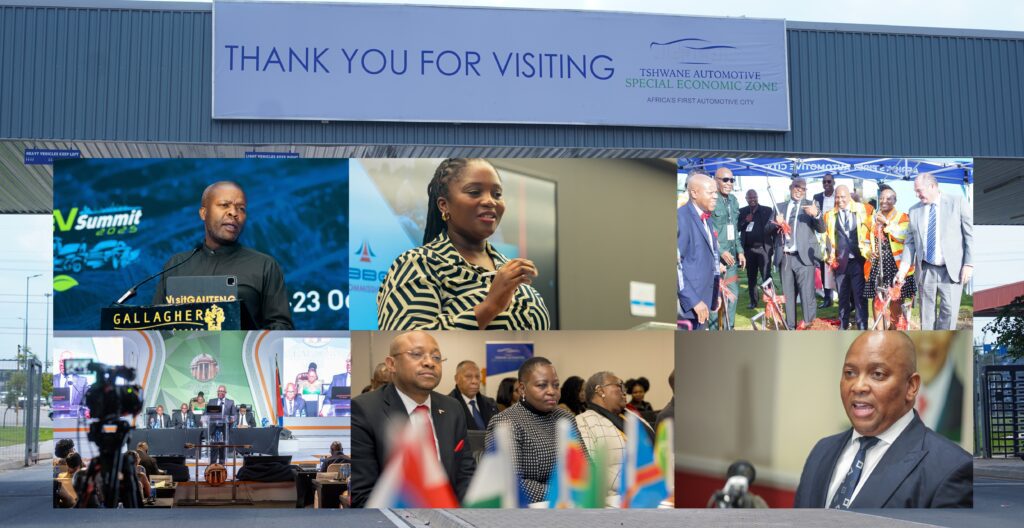
As 2025 draws to a close, the Tshwane Automotive Special Economic Zone’s CEO Dr Bheka Zulu looks back on a year that truly defined Africa’s first automotive city.   It was a year of bold steps forward, strengthened partnerships, international visibility and a deepening role in South Africa’s industrialisation agenda. From breaking ground on new infrastructure to hosting high-level national events, TASEZ continued to prove why it is the country’s leading special economic zone (SEZ). Breaking new ground: Phase 2 takes off One of the standout highlights of the year was the sod-turning ceremony for Phase 2 of the TASEZ development, involving the Gauteng Premier, Panyaza Lesufi, TASEZ board members and anchor tenant Ford. The event signalled the start of an ambitious expansion designed to support South Africa’s next wave of automotive and component manufacturing investment. Phase 2 introduces new industrial platforms, expanded supplier capacity, and opportunities for medium, small, and micro enterprises (MSMEs). It positions TASEZ to meet growing global demand, particularly in new energy vehicles (NEVs), and strengthens its integration into Tshwane’s industrial and logistics corridors. This moment marked a powerful step into the future and demonstrated the commitment from government, industry and local partners to drive sustainable, job-rich economic growth. A historic first: Hosting the State of the Province Address In February, TASEZ made history by becoming the first government institution to host a State of the Province Address (SOPA). This landmark moment brought South Africa’s leadership, the diplomatic community, the automotive sector and media into the heart of the SEZ. Hosting the SOPA showed that TASEZ is not only a centre of production, but a national platform for dialogue, policy direction and public accountability. The event showcased the SEZ’s impressive infrastructure, operational readiness and central role in the province’s economic plans. For many South Africans watching, or attending, TASEZ became synonymous with Gauteng’s vision of a modern, industrial, investment-ready economy. Expanding global reach: TASEZ heads to China and hosts SADC International engagement was a defining feature of 2025. This was reinforced by a successful business mission to China, with the TASEZ leadership meeting major automotive manufacturers, potential investors and technology partners. The visit focused on: Showcasing Phase 2 investment opportunities; Building relationships with NEV manufacturers; Exploring technology transfer and supplier development models; and Strengthening government-to-government collaboration. With China leading global NEV production and innovation, this mission placed TASEZ firmly on the radar of companies looking for a strategic African manufacturing base. In addition, in yet another first for a South African SEZ, TASEZ welcomed the heads of mission from the Southern African Development Community (SADC) to share information and talk about unlocking opportunities for economic growth in the region. The TASEZ team, headed by CEO Dr Bheka Zulu, rolled out the red carpet for the distinguished SADC delegation – ambassadors, high commissioners, and chargés d’affaires – along with representatives from the Department of International Relations and Cooperation, the Department of Trade, Industry and Competition, Brand South Africa, and Trade and Investment KwaZulu-Natal. This gathering was not just a simple meeting – it was a deliberate step toward weaving stronger ties between neighbours, aligning with the goals of SADC, the Southern Africa Customs Union, and the African Continental Free Trade Area. Strengthening policy alignment: Visits from TIPS and Parliament Two significant engagements this year reinforced TASEZ’s role as a strategic player in South Africa’s industrial development landscape: a visit by the parliamentary portfolio committee for trade, industry and competition, followed by a visit from TIPS (Trade and Industrial Policy Strategies). The parliamentary visit highlighted TASEZ’s importance in national oversight and industrial planning. Members engaged with management, toured facilities and assessed the SEZ’s socio-economic impact. The research institution visited the SEZ to assess its contribution to localisation, job creation and competitiveness. Their findings helped strengthen policy alignment and opened discussions on future collaboration. Both visits affirmed that TASEZ is not just delivering – it is taking the lead. Governance excellence: Five clean audits in a row In a year filled with milestones, one achievement stands out for its consistency and integrity: TASEZ received its fifth clean audit. This accomplishment highlights: Strong internal controls; Responsible financial management; A culture of accountability; and Confidence from both the government and investors. At a time when transparent and ethical public administration is more important than ever, TASEZ continues to demonstrate what professional, compliant, high-performing institutions can achieve. A strong industry presence: Naacam and naamsa conferences TASEZ strengthened its industry footprint this year by participating in two major automotive forums: the Naacam Show held in Gqeberha in August 2025 – engaging component manufacturers and showcasing localisation opportunities; and naamsa’s Auto Week that also took place in Gqeberha, but in October 2025 – networking with OEMs and industry leaders while promoting TASEZ’s investment-ready platforms These conferences reinforced TASEZ’s growing reputation as a critical hub for automotive manufacturing, innovation and supplier development. Driving the future: Co-hosting the first NEV Summit TASEZ took centre stage in South Africa’s transition to electric mobility by co-hosting the inaugural New Energy Vehicle Summit held at the Gallagher Convention Centre in late October 2025. The summit brought together policymakers, OEMs, suppliers, researchers and energy experts to map out the country’s role in the global NEV shift. TASEZ’s involvement sent a strong message: the SEZ is ready to become South Africa’s home of NEV manufacturing. The summit provided a platform to discuss infrastructure needs, workforce readiness, supply-chain adjustment and opportunities for new investment. Looking ahead to 2026 If 2025 was a year of bold advances, 2026 promises to be a year of consolidation and delivery. With major construction underway, new investment discussions progressing, and a clear national mandate to support industrial growth, TASEZ is set to play an even bigger role in shaping the country’s economic future. TASEZ enters the new year with momentum, credibility and a clear vision to be Africa’s premier automotive manufacturing destination. Lorem ipsum dolor sit amet, consectetur adipiscing elit. Ut elit tellus, luctus nec ullamcorper mattis, pulvinar dapibus leo.
RFQ 075/2025: For the provision of cherry picker (novice) training

The Tshwane Automotive Special Economic Zone (TASEZ) seeks to appoint a service provider for the provision of cherry picker (novice) training to a total number of 15 individuals as outlined in the scope of work. The training is earmarked for individuals within TASEZ’s operational for implementation in Q3 of FY25/26. Closing date: 15 December 2025 at 12h00. Download RFQ075/2025 here

TASEZ CEO to spotlight Africa’s automotive opportunity at SEZ Summit in Durban

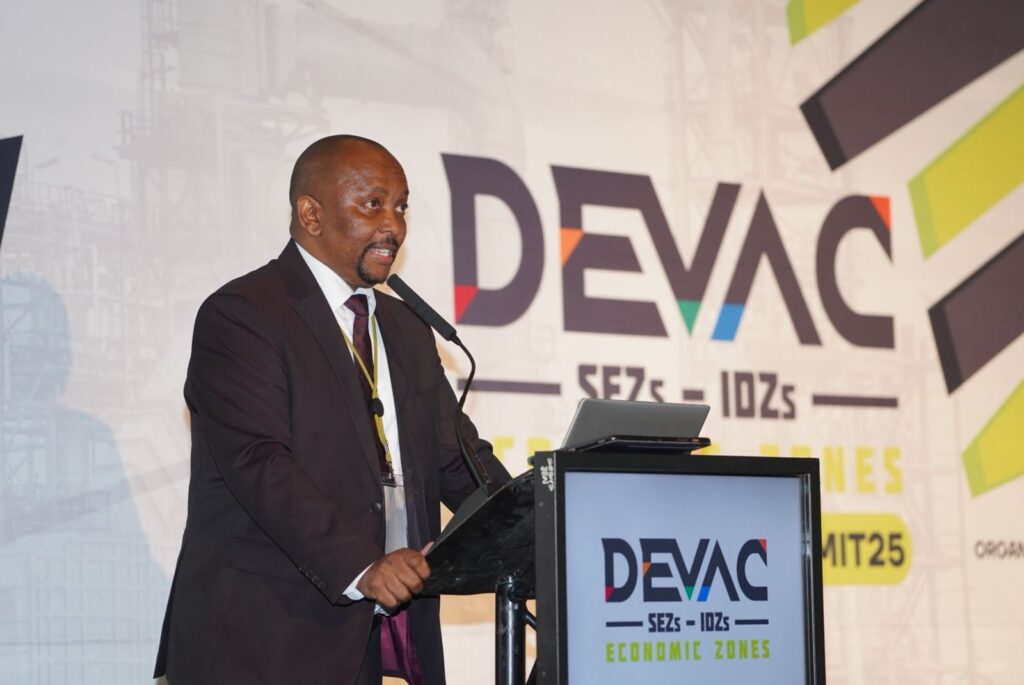
By Mandla Mpangase A summit focused on how economic zones can be a growth opportunity for South Africa gets underway in Durban, KwaZulu-Natal today. Taking place from 3 – 4 December 2025 under the theme “Transforming Africa’s economy: Catalysing growth and future investment by enhancing competitiveness through SEZ and IDZ projects”, the DEVAC Special Economic Zones/Industrial Development Zones Summit brings together governments, representatives from SEZs and IDZs, private-sector leaders, development experts, and global investors to map out the next era of Africa’s industrial expansion. The Tshwane Automotive Special Economic Zone (TASEZ) CEO Dr Bheka Zulu will be a key panellist on 4 December 2025 in a high-level discussion exploring how Africa can unlock greater value from its emerging automotive sector. Driving value addition and youth employment through innovation Dr Zulu will join the panel titled “Leveraging industrial clustering, 4IR, and Africa’s emerging auto sector to drive value addition and youth employment in SEZs”. The session will unpack how SEZs can accelerate industrialisation through advanced manufacturing, Fourth Industrial Revolution technologies, and integrated value chains – areas  in which TASEZ has rapidly positioned itself as a national leader. TASEZ has become South Africa’s fastest- growing automotive hub and a cornerstone of the country’s reindustrialisation agenda. Dr Zulu’s contribution to the panel is expected to provide practical insights into how SEZs can cultivate specialised skills, create youth employment, and attract sustainable investment by leveraging industrial clustering and global automotive trends. The discussion will be moderated by Prof. Joe Amadi-Echendu from the University of Pretoria’s Engineering and Technology Management faculty. Dr Zulu will be joined by a distinguished group of panellists, including: Nomvula Shongwe-Gulwako, Acting CEO, Royal Science and Technology Park, Eswatini Tapiwa Samanga, Group CEO, Production Technologies Association of South Africa (PtSA) Dr Luyolo Mabhali, Executive Cluster Manager: Future Production – Manufacturing, CSIR Anathi Mlungwana, Unit Head: Trade Facilitation, Coega Development Corporation Philip Krause, Consulting Manager: Transport, Pegasys Global Consulting Together, the panel will explore how economic zones can shift from traditional manufacturing to innovation-driven ecosystems that promote competitiveness, integrate regional value chains, and support Africa’s industrial ambitions. Unlocking the full potential of economic zones The summit itself underscores the growing importance of SEZs and IDZs in driving Africa’s economic future. These zones, designed to boost local industries, streamline investment processes, and enhance regional exports, are central to the continent’s efforts to compete in a rapidly evolving global economy. While SEZs and IDZs offer significant promise, their potential remains under-utilised due to challenges ranging from infrastructure gaps to regulatory complexity and limited financing. The summit aims to address these barriers by strengthening collaboration among governments, investors, and industry leaders. A strategic moment for Africa As global demand shifts toward greener manufacturing, digital transformation, and resilient supply chains, Africa’s economic zones—particularly in high-growth sectors like automotive production—are poised to play a defining role. Dr Zulu’s participation signals South Africa’s commitment to shaping that future, positioning TASEZ not only as a national success story but as a continental model for how innovation and industrial clustering can transform economies and create sustainable employment. The summit’s insights are expected to guide future investment, strengthen partnerships, and accelerate the development of competitive and globally connected economic zones across Africa.

Gauteng must ensure every rand derives tangible value and benefits for the people – MEC

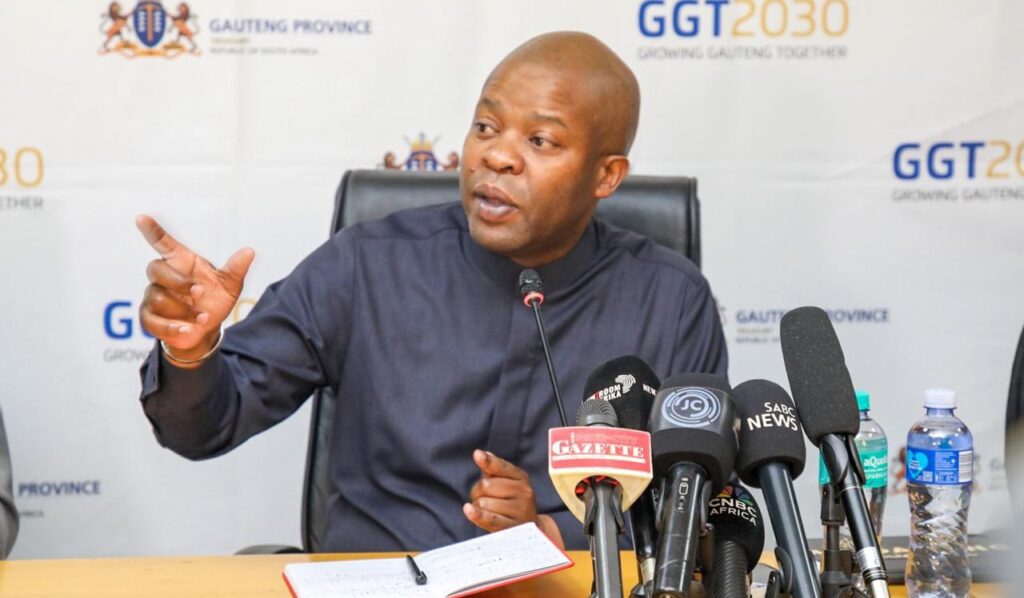
By Mandla Mpangase Infrastructure investment plays a pivotal role in economic development and job creation and contributes directly to the quality of life of our citizens, Gauteng MEC for Finance and Economic Development, Lebogang Maile, told the Gauteng Legislature during the tabling of the province’s medium-term policy statement and adjustment budget. Addressing the Legislature on 2 December 2025 Maile said that Gauteng must increase its investment in infrastructure and improve on robust infrastructure systems that support all provincial services including transport, health, education and social development.  “The Provincial Treasury has already introduced various measures to improve on the efficient and effective use of financial resources allocated for infrastructure projects,” MEC Maile said, adding that Instruction Notes have been issued as promised with the aim of responding to the needs of the intended beneficiaries and to prevent wasteful expenditure. “When we fail to deliver projects on time, within budget and to specifications inclusive of legislative compliance, we compromise on value for money.” Funding constraints meant that the provincial government had to intensify its efforts to secure alternative resource financing models. MEC Maile noted: “The high level of dependence on the provincial fiscus to fund infrastructure projects must also be addressed through the strengthening of cost recovery and exploring alternative funding sources.” More focus was being placed on consequence management of poorly performing service providers. “All provincial departments and entities are encouraged to work with the Provincial Treasury and other relevant stakeholders to prepare bankable applications for infrastructure projects that qualify for Budget Infrastructure Fund funding.” One key measure being taken was to focus on public-private partnerships as a vehicle to attract additional resources for infrastructure projects.  Maile pointed out that Gauteng’s economic output in 2024 reached R2.4-trillion, making the province the country’s economic hub, responsible for R33 out of every R100 the country’s economy produces. Gauteng, with KwaZulu-Natal, and Western Cape, contributes approximately 63% of South Africa’s GDP. “However, we understand that the economy of this province must record far higher growth rates to lift South Africa’s GDP, accelerate the creation of much needed jobs and reduce poverty,” Maile said. Economic overview It was against this backdrop that the provincial executive council recently approved the Gauteng City Region Economic Growth and Development Plan. The plan is intended to contribute to the three strategic priorities of inclusive economic growth and job creation; improved living conditions and enhanced health and well-being; and a capable, ethical, and developmental state. The strategy is anchored on 10 pillars: reindustrialisation through sector support; the promotion of trade and investment; spatial transformation and integration; economic and social infrastructure development; sustainable economic development; entrepreneurship and small business development support; skills of the future and workforce development; building state capacity; safety and security; and the development of corridors of regional integration. The cross-cutting pillars of the strategy are innovation and digital transformation; women, youth and people with disabilities; township procurement; and research and development. Gauteng City Region Economic Growth and Development Plan is also supported by 12 sector master plans to enable policies and strategies, including the Township Economy Development Act (and the Township Economy Revitalisation Strategy), the Informal Business Upliftment Strategy, the Medium, Small and Micro Enterprises Strategy, the Trade and Investment Strategy and Green Hydrogen. MEC Maile told the Legislature that the Department of Economic Development is currently hosting several sector roundtables which will culminate in the establishment of the 12 sector-specific action labs. “These action labs will act as multistakeholder collaborative and solution-oriented platforms to enhance the effectiveness and implementation of the strategy. “The effective implementation of this strategy will set Gauteng on a positive economic growth path and create much needed jobs, amid global headwinds and domestic economic challenges,” Maile said. “We are working in partnership with all key stakeholders to accelerate efforts to facilitate economic infrastructure development; trade and investment promotion; improve the ease of doing business; and empower micro, small and medium enterprises, particularly those owned by previously disadvantaged groups.” This will go a long way in enabling the province to close the current output gap, enhance production and significantly increase our participation in international markets, he explained. The MEC tabled the Medium-Term Budget Policy Statement 2025, the Adjusted Estimates of Provincial Revenue and Expenditure 2025, and the Adjusted Estimates of Capital Expenditure 2025 for consideration. A responsible balance “The national fiscal framework is aimed at ensuring a responsible balance between government spending, tax revenue, and borrowing to prevent unsustainable debt to create a stable environment for long-term growth, job creation and investment financing of public services,” Maile said. “As the provincial government, our fiscal trajectory reflects these national issues. That is why our focus is on debt management, revenue strategies, and spending restraint, while seeking alternative funding sources to meet increasing public service demands amidst weak economic performance.” The provincial five-year budget approach introduced in the previous financial year will be continued for the 2026 Medium-Term Expenditure Framework (MTEF) Budget with the aim of addressing high-level provincial risks and stabilising public finances. The principles guiding the 2026 MTEF Budget include: Protecting vulnerable members of our society; Realising efficiencies in the provincial procurement processes; Focusing on “ready-to-deliver” infrastructure projects; Funding accruals as a first charge against the department’s budget allocation; Reprioritising existing baselines to fund provincial priorities budget pressures or new funding requirements; Compensation of Employees budgets must remain within the limits set in the 2025 Budget; and Ensuring long-term fiscal sustainability through own revenue collection, alternative funding sources, trade-offs, downscaling or stopping programmes. “The goal of these principles is to stabilise provincial public finances by maintaining fiscal discipline and credibility and ensure impactful service delivery.” Adjustments budget The 2025/26 Adjustments Budget addresses pressures in frontline services, as a means of equipping the Gauteng Provincial Government to continue responding to the provincial imperatives underpinning the 2024 – 2029 MTDP and the G13 priorities. The total adjustment is R3.3-billion which includes the rollovers, national and provincial funding.  As part of this Adjustments Budget, an additional R2.2-billion has been allocated to provincial departments as follows: 

A key lesson from the 2025 G20 Summit: Industrialisation must power SA’s economic growth

As South Africa concludes its historic G20 Presidency, the first to be hosted on African soil, a clear message has emerged: the world is ready to recognise Africa as a central engine of shared prosperity, writes the Chairperson of the Tshwane Automotive Special Economic Zone, Maoto Molefane. We must make the most of the momentum. On the weekend of 22 and 23 November 2025, the G20 heads of states gathered in Johannesburg to endorse commitments that speak directly to the continent’s long-standing aspirations: equitable development, sustainable industrialisation, resilient economies, and fair participation in global trade. For South Africa, and for advanced industrial platforms like the Tshwane Automotive Special Economic Zone (TASEZ), this moment is far more than just a diplomatic symbolism, it is about the acceleration of economic growth to combat poverty and inequality, with industrialisation serving as a key driver of inclusive growth, job creation, and global competitiveness. The G20 2025 mandate President Cyril Ramaphosa’s closing message from the G20 Summit underscored the stakes. South Africa’s development needs – jobs for young people, robust infrastructure, energy security, thriving export industries – require global stability, inclusive growth and a level playing field. The G20 outcomes align directly with South Africa’s industrial ambitions: A new global approach to critical minerals ensures that mineral-rich countries like South Africa benefit from beneficiation at home – a key component of the localisation drive of the South African Automotive Masterplan 2035. Commitments to climate finance strengthen the foundation for a just energy transition that protects workers, communities, and industrial capacity – ensuring that South Africa becomes a sustainable and resilient country based on a green economy. Debt relief discussions aimed at freeing the liquidity of developing nations, thus enabling them to invest in critical infrastructure, skills development programmes and innovation – all of which are essential inputs of industrial expansion. Support for disaster-resilient economies, safeguarding industrial zones and supply chains from climate-related shocks. These are not abstract policy wins. They reshape the environment in which industrial zones like TASEZ operate: they unlock space for growth that is sustainable, technologically advanced and globally aligned. As President Ramaphosa said: “Together, we must accelerate progress towards the 2030 Sustainable Development Goals and the Pact for the Future. We have laid the foundation of solidarity. Now we must build the walls of justice and the roof of prosperity.” Industrialisation as an engine for growth Given that the 2025 G20 provided a strong voice for Africa, it must be noted that the continent has anchored the world’s supply chains for far too long without capturing its share of industrial value. “The greatest opportunity for prosperity in the 21st century lies in Africa,” President Ramaphosa said in his closing remarks. He described the continent as a driving force for future growth, innovation, mineral beneficiation, climate resilience and energy transition.  The 2025 G20 Declaration calls for structural reforms, investment mobilisation, and digital transformation that place industrialisation at the heart of global development priorities. What this means for South Africa is that the country must build, manufacture, innovate, export, and compete. This is the work TASEZ – Africa’s first automotive city – was created to do. Based in the country’s capital city, TASEZ is demonstrating what coordinated industrial policy can achieve: World-class manufacturing platforms supporting global automotive brands and their suppliers; Localisation programmes that deepen South Africa’s manufacturing base and stimulate small business participation; Green industrial infrastructure that positions the zone for the new energy and electric vehicle and hydrogen and solar economies; and Skills programmes that equip young people for advanced manufacturing and digital production. TASEZ is not just an industrial hub, it is a catalyst for economic resilience and can serve as a model for the equitable, future-oriented development highlighted in the G20 Declaration. Beneficiation is a must The global commitment to fair critical mineral development provides South Africa with a generational opportunity: to build integrated value chains centred on electric vehicles, battery manufacturing, renewable energy components and advanced materials. As the President noted, minerals must become “a source of prosperity and sustainable development in the countries that produce them”. This aligns perfectly with South Africa’s automotive transition strategy and TASEZ’s expansion into green manufacturing, downstream processing and high-value production clusters. The President called the 2025 summit the People’s G20, characterised by the engagement of business, labour, youth, scientists, mayors and civil society. This spirit of collaboration is the very essence of effective industrialisation and special economic zones implementation/development, both of which rely on coordinated action between government, investors, communities and workers. South Africa’s G20 success, combined with improving economic indicators and growing confidence in our reform programme, demonstrates that the country is ready for a new industrial chapter based not on extractive development, but a shared value, skills development, innovation, and sustainable manufacturing. Looking ahead As global leaders return home, the world’s attention shifts from diplomacy to delivery. For TASEZ, the task is to translate the political momentum of the G20 into practical industrial capacity. The Johannesburg G20 summit marks a critical turning point for global industrialisation, especially for Africa. The commitments around infrastructure, climate transition, and inclusive development resonate deeply with our vision to build a sustainable, high-tech automotive hub that benefits local communities, talents, and small industrial players. However, for this to be more than rhetoric, the world must translate pledges into concrete investment, local value-chain development, and support for medium, small, and micro enterprises. The timing could not be better, as TASEZ ratchets up its Phase 2 developments. TASEZ will be focused on: Attracting green manufacturing investments; Accelerating automotive and component localisation; Supporting small business entry into advanced value chains; Building human capital for future industries; Expanding export-ready industrial infrastructure; and Driving the beneficiation of minerals linked to electric vehicle and battery manufacturing. The G20 Summit has shown the world what South Africa can achieve when united by purpose. As President Ramaphosa said: “Let us move forward together, demonstrating to the world that we have the capacity to confront and overcome the world’s challenges. Through partnerships

Thank you to the people of South Africa for a historic G20 Presidency

“We have placed Africa’s growth and development at the heart of the G20’s agenda,” writes South Africa’s president Cyril Ramaphosa in his latest weekly newsletter published on 24 November 2025 – the day after the closing of the 2025 G20 Leaders’s Summit. Over the past two days (22 and 23 November 2025), our country hosted leaders from around the world for the G20 Leaders’ Summit in Johannesburg.  This is the first time that the G20 has been hosted on African soil. Recognising the importance of this milestone, we have placed Africa’s growth and development at the heart of the G20’s agenda.  The G20 matters for South Africa not only to cement our important role in international affairs, but also to support our own growth and create jobs for South Africans. We can only achieve these objectives in an environment of global stability, inclusive growth and a level playing field.  Leading up to the G20 Leaders’ Summit, we hosted tens of thousands of delegates for more than 130 meetings in every part of our country, from Gqeberha to George, Cape Town to eThekwini, Hoedpsruit to Polokwane. We welcomed visitors from around the world to see and enjoy the beauty of our natural landscapes, the warmth of our people’s hospitality and the sophistication of our economy.  Our G20 Presidency has been rooted in the conviction that the world needs more solidarity, equality and sustainability.  While some have sought to create division and polarisation between nations, we have reinforced our shared humanity. We have fostered collaboration and goodwill. Above all, we have affirmed that our shared goals outweigh our differences.  We have prioritised issues that are important for advancing more rapid and inclusive growth in our own country. We reached agreements that will benefit every South African.  We secured a clear commitment from the international community to address the high levels of debt which divert spending by developing economies – including our own – on infrastructure, health and education. We placed this issue firmly on the agenda to increase investment on the continent and seize the unique opportunity that Africa presents.  The G20 leaders agreed on the need for increased global investment for climate action. This will be crucial for South Africa as we undertake a just energy transition to a low carbon economy in a manner that protects workers, businesses and communities.  As the G20, we have agreed on the need for scaled up disaster prevention and post-disaster reconstruction to address the rising impact of extreme heat, floods, droughts and wildfires. We raised this issue because a few areas in our country, particularly the Eastern Cape and KwaZulu-Natal, frequently experience disasters.  We have secured international agreement on a new approach to critical minerals so that they become a source of prosperity and sustainable development in the countries that produce them.  This supports our own ambition to use our extensive endowment of minerals to become a leading global player, while ensuring that beneficiation takes place in South Africa and creates jobs in mining areas.  This has been the People’s G20. It has given new prominence to engagement groups from across global society, bringing together sectors like business, labour, parliaments, scientists, think tanks, women, young people, start-ups, civil society, mayors and the media. We can be proud of what South Africa has achieved in hosting a successful G20 Presidency and guiding countries towards agreement on complex and important issues. This has been the historic effort to which all South Africans have contributed. We thank the many people who welcomed visitors to our country, and the security services who ensured that the G20 Leaders’ Summit and all G20 events took place without incident. We thank all the members of different social sectors who participated in the engagement groups and in other G20 activities throughout the year. We thank our Premiers and Mayors for having been such welcoming hosts. We thank our Ministers and Deputy Ministers, G20 Sherpas and government officials who guided the deliberations with wisdom and purpose. Above all, we thank each and every South African for contributing to this success, and for showing the world the strength of our values, the generosity of our people and the power of what we can achieve when we work together. Many of the foreign leaders and delegates who came to our country recognised what our Ubuntu spirit is all about. The success of the G20 Leader’s Summit, together with the improving performance of our economy and growing confidence in our reform programme, shows that South Africa is a country on the rise.

How South Africa’s G20 Presidency can accelerate industrial growth through TASEZ

When South Africa welcomes the world to the G20 Leaders’ Summit this month, our nation will experience one of the most profound moments of global visibility since the country’s dawn of democracy, writes the CEO of the Tshwane Automotive Special Economic Zone (TASEZ), Dr Bheka Zulu. As heads of state, global CEOs, investors, and development partners converge on our shores for the G20 Leaders’ Summit on 22 and 23 November 2025, the world’s gaze will fall not only on our political leadership, but on our economic capability, our industrial resilience, and our readiness to take our place in a rapidly shifting global economy. For those of us tasked with building South Africa’s next-generation industrial platforms, this moment is far more than a diplomatic milestone. It is an opportunity to reshape the country’s industrial trajectory for decades to come. And for the Tshwane Automotive Special Economic Zone (TASEZ), it is a chance to demonstrate that South Africa can compete, innovate, and lead in one of the world’s most dynamic sectors: automotive manufacturing. South Africa in the global spotlight The G20 is not just a gathering of 20 world leaders. It is a year-long platform where global investment sentiment is shaped, where development financing agendas are debated, and where emerging markets like South Africa position themselves as credible partners in the global value chain. It has already triggered accelerated investments in infrastructure, logistics, and city improvement projects, particularly in Gauteng. This matters for industrial zones like TASEZ. Better roads, more reliable energy, and upgraded transport networks are the lifeblood of manufacturing competitiveness. But the physical changes are only part of the story. The more significant shift is reputational. A successful G20 presidency can strengthen investor confidence, deepen trust in our economic institutions, and position South Africa as a stable, future-oriented industrial hub. That alone makes this moment essential for TASEZ and the broader automotive sector. Global industrial priorities What excites me is how closely South Africa’s G20 priorities align with TASEZ’s mission. The 2025 agenda focused on: Financing the just energy transition Inclusive industrialisation Sustainable development The role of critical minerals Mobility and climate resilience These are not abstract ideas, they cut to the heart of the automotive industry’s transformation. As highlighted by the recent New Energy Summit held in Gauteng in October 2025, global value chains are pivoting to green mobility, clean manufacturing, and Africa’s integration into supply networks. TASEZ is uniquely positioned in this transition. We are already home to one of Africa’s most dynamic automotive production ecosystems, and we are preparing for a future that includes electric mobility, deeper localisation, and expanded supplier development. If South Africa leverages its G20 presidency effectively, we can secure the policy tools, partnerships, and financing mechanisms needed to accelerate this transition. Showcasing South Africa’s successes The world will not judge us by speeches alone. They will judge us by what we build. This is why TASEZ intends to use the G20 window to demonstrate what coordinated public–private investment can achieve. As the fastest-growing automotive special economic zone (SEZ) on the continent, we have a compelling story to tell — one of job creation, skills development, township inclusion, supplier growth, and industrial expansion. We should be bold in inviting foreign delegations, development finance institutions, and global OEMs to see the zone firsthand. Site visits, technical tours, and bilateral industry roundtables can turn interest into investment. The G20 gives us a once-in-a-generation platform to do this at scale. The G20 Leaders’ Summit will bring renewed attention to Africa’s role in the global economy. For TASEZ, this is an opportunity to expand its influence beyond South Africa’s borders. Through stronger relationships with the Southern African Development Community (SADC) and African Union partners, we can position TASEZ as a catalyst for regional automotive value chains — a future where components made in Botswana, Mozambique, Zambia, or Zimbabwe flow seamlessly into assembly lines in Tshwane. More than symbolic South Africa must convert visibility into tangible improvements in industrial competitiveness. We must guard against the tendency to treat major summits as symbolic rather than strategic. Investment is not secured by banners, speeches, or social media clicks. It is secured by credibility, efficiency, transparency, and delivery. For TASEZ, this means: strengthening governance; accelerating infrastructure development; ensuring investor facilitation is world-class; and delivering certainty around timelines, incentives, and operations. The 2025 G20 Summit is a strategic opportunity for South Africa to reposition itself as the continent’s industrial leader, providing a platform for government, business, and development partners to act with unity. For TASEZ, it is a chance to amplify what we already know: that South Africa can build globally competitive manufacturing hubs; that our people can produce world-class automotive products; and that, with the right partnerships, we can transition into the mobility future with confidence. The world is coming to South Africa. Will we use this moment to shape our industrial destiny? We at TASEZ intend to do just that.